
Ion Exchange Resins
High-performance resins for softening, demineralisation and selective ion removal.
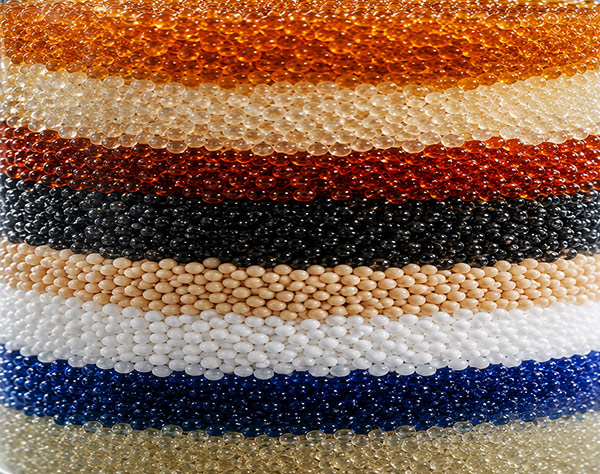
Ion Exchange Resins
Ion exchange resins are insoluble polymer beads designed to exchange specific dissolved ions in water with other ions held within the resin structure.
Depending on their functional chemistry, resins can be used to remove hardness-forming calcium and magnesium, dissolved cations and anions, alkalinity, nitrate, silica and selected ionic contaminants.
Hydroxy supplies cation, anion, mixed-bed and speciality ion exchange resins selected according to feed-water chemistry, treatment objective, regeneration method and required treated-water quality.
Products
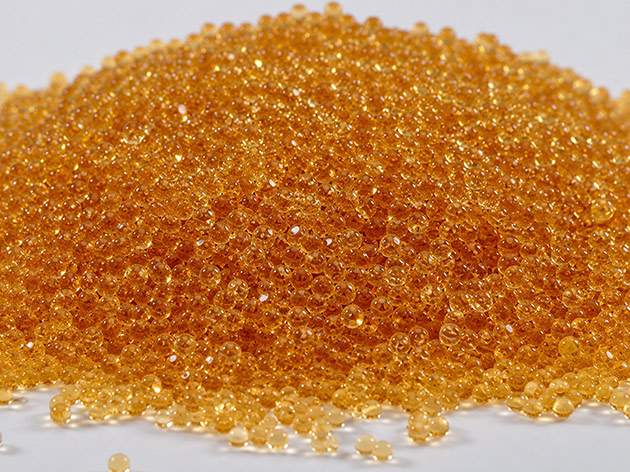
Water Softening Resins
Softening resins are typically strong-acid cation resins supplied in the sodium form. They exchange sodium ions for hardness-forming calcium and magnesium, helping reduce scale formation in downstream equipment.
Water softeners, boiler pretreatment, cooling-water systems, commercial water treatment, laundries, hotels and industrial process water.
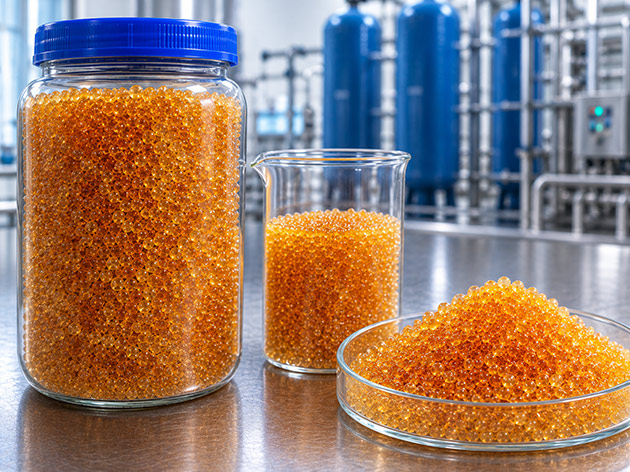
Strong Acid Cation - SAC Resins
SAC resins contain strongly acidic functional groups and can operate across a broad pH range. Depending on the ionic form, they can be used for either water softening or removal of dissolved cations in demineralisation processes.
Softening, demineralisation, deionisation, mixed-bed systems, boiler make-up water and industrial process water.
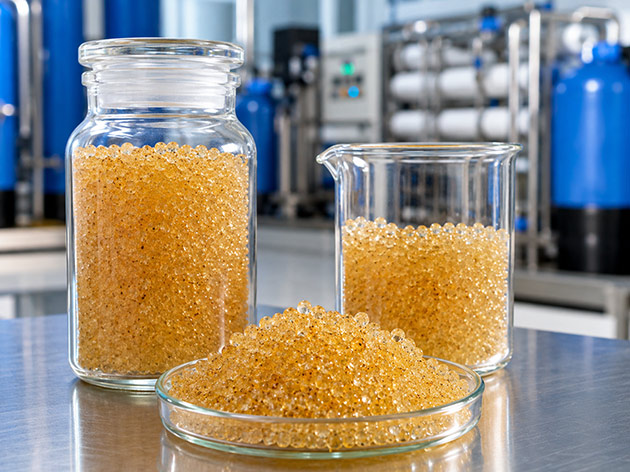
Weak Acid Cation - WAC Resins
Weak-acid cation resins are commonly used where temporary hardness and alkalinity need to be reduced. They can also be combined with strong-acid cation resins to improve regeneration efficiency in demineralisation systems.
Dealkalisation, temporary-hardness removal, partial demineralisation and industrial make-up water.
Strong Base Anion - SBA Resins
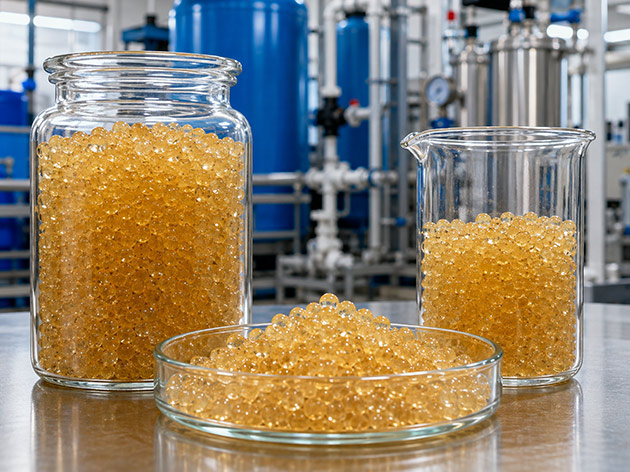
Strong-base anion resins exchange negatively charged ions and are widely used after cation treatment in demineralisation systems.
Appropriate grades can remove mineral-acid anions and provide effective silica reduction where high-quality demineralised water is required.
DM plants, high-purity water, boiler make-up water, process water and mixed-bed systems.
Weak Base Anion - WBA Resins
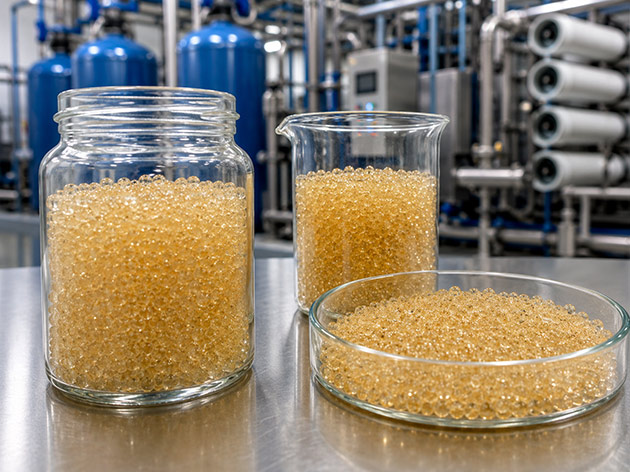
Weak-base anion resins are used primarily for removal of strong mineral acids and can provide efficient regeneration characteristics in suitable water compositions. Macroporous and acrylic grades can also provide improved tolerance to naturally occurring organic matter.
Industrial demineralisation, boiler-feed pretreatment, surface-water treatment and organic-rich feed water.
Mixed-Bed Ion Exchange Resins
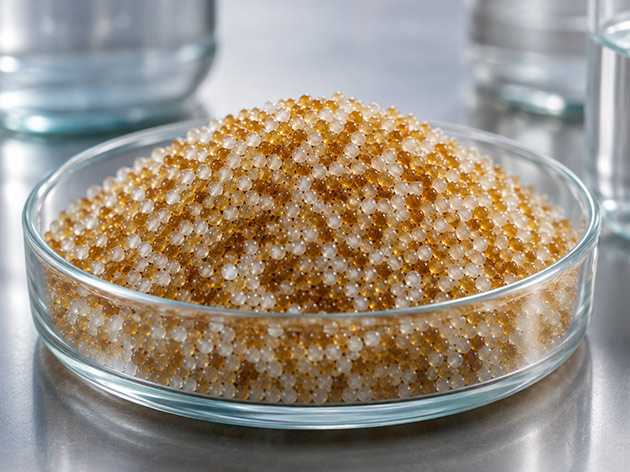
Mixed-bed resin contains strong-acid cation and strong-base anion resins intimately mixed within the same treatment vessel. This arrangement provides a large number of sequential cation and anion exchange sites and is used where very low conductivity and high final water purity are required.
Final DM polishing, RO permeate polishing, laboratory water, pharmaceutical utilities and high-purity industrial water.
Nitrate-Selective Resins
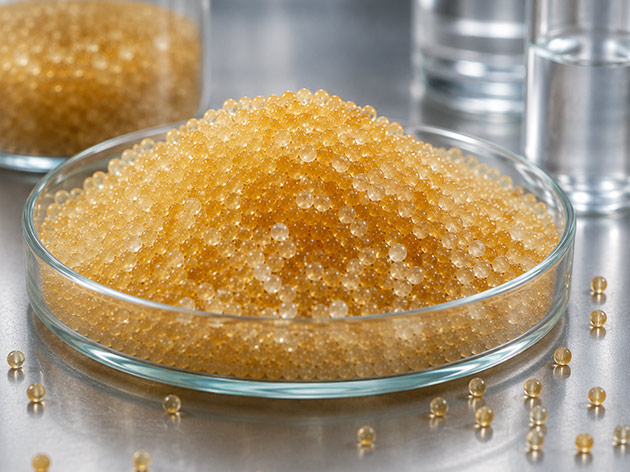
Nitrate-selective resins are specially formulated anion exchangers designed to preferentially remove nitrate from contaminated water. The correct resin is selected according to nitrate concentration, competing ions and required treated-water quality.
Drinking water, groundwater treatment and municipal water purification.
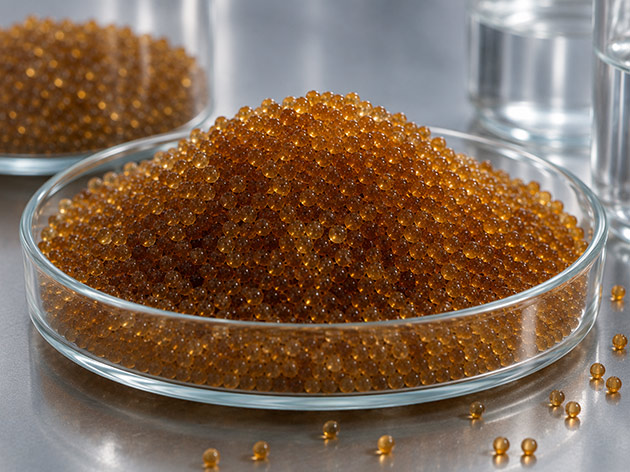
Organic Scavenger Resins
Organic scavenger resins are designed to adsorb and exchange negatively charged organic substances present in surface water and other organic-rich feed streams. Reducing organic loading can also help protect downstream anion resins and other purification processes.
Surface-water treatment, colour reduction, organic-load reduction, pretreatment and industrial demineralisation.
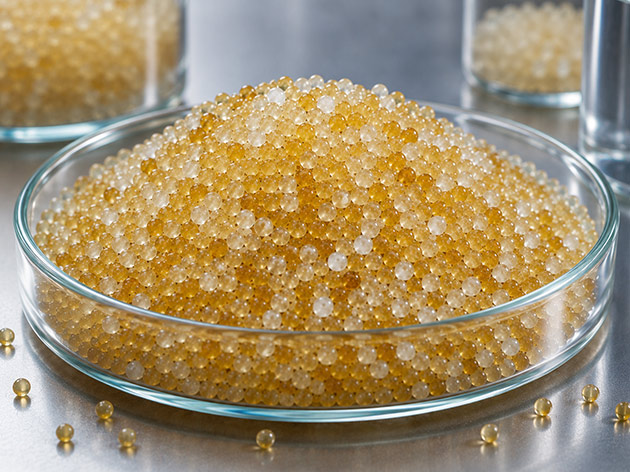
Selective & Chelating Resins
Selective and chelating resins contain functional groups designed to preferentially bind specific ions rather than provide general softening or demineralisation. These products can be selected for removal or recovery of particular metals and ionic contaminants.
Heavy-metal removal, industrial wastewater polishing, metal recovery and specialised process-water purification.
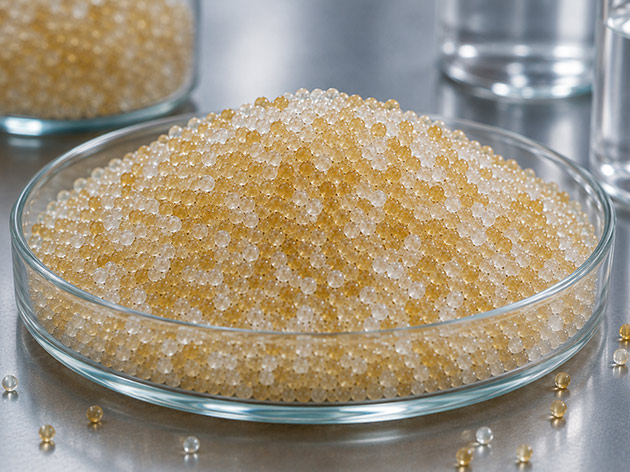
High-Purity / Ultrapure Water Resins
High-purity resin grades are manufactured and conditioned for applications where very low ionic leakage and low extractable contamination are required. They may be supplied as separate cation/anion resins or as pre-mixed polishing resins.
Pharmaceutical water, electronics, semiconductor water, laboratory systems, high-purity process water and final polishing after RO.