Ultraviolet (UV) Disinfection
Hydroxy designs Iron Removal Systems to reduce dissolved and suspended iron from water helping eliminate reddish-brown staining, metallic taste, deposits and iron-related problems in plumbing and downstream equipment.
Ultraviolet (UV) Disinfection
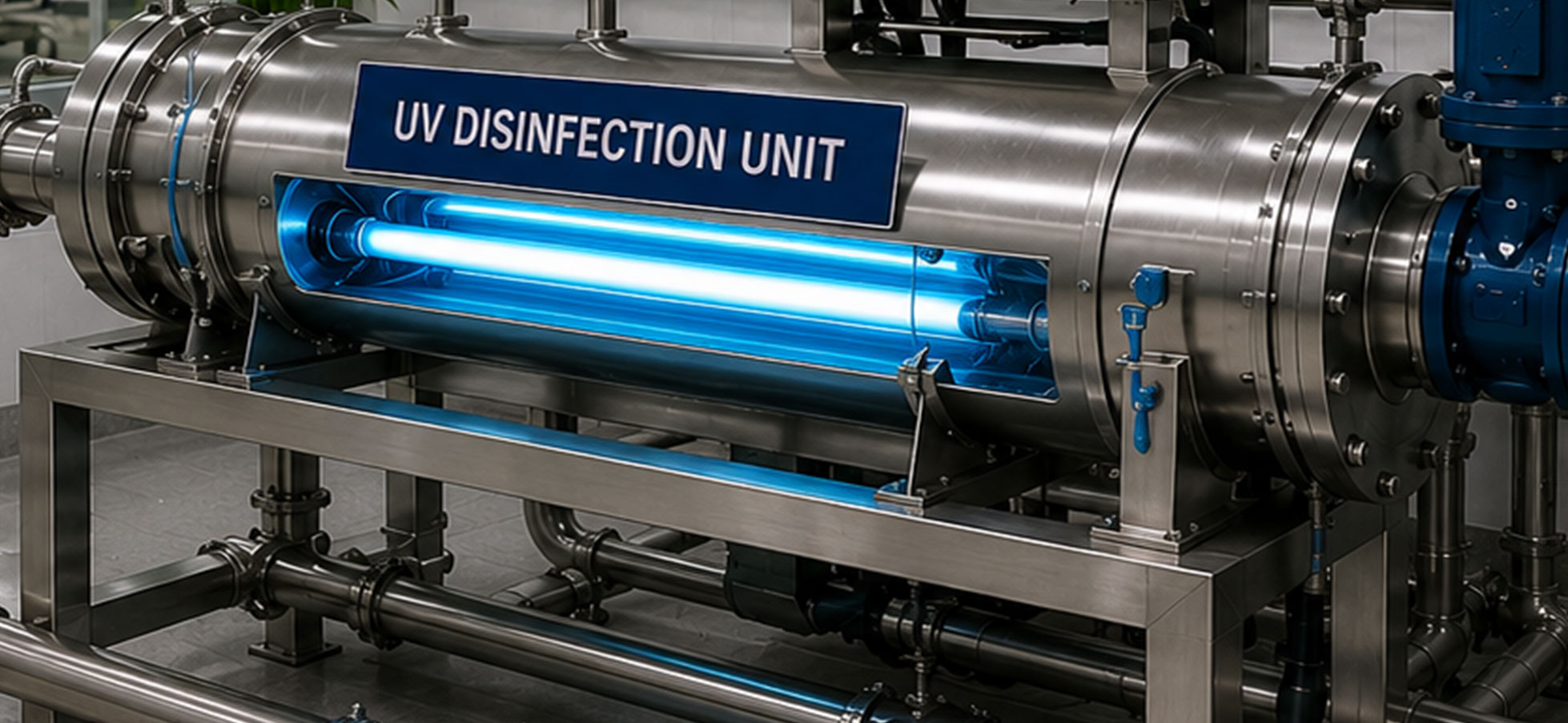
Ultraviolet disinfection is a physical water-treatment process that uses UV-C light to inactivate microorganisms by disrupting their ability to reproduce.
Water passes through a UV reactor containing a specialised ultraviolet lamp. As microorganisms are exposed to the required UV energy, their genetic material is damaged, preventing further replication.
UV treatment does not depend on adding disinfectant chemicals to the water and does not normally alter its taste, odour or mineral composition.
Hydroxy Water Technologies designs UV systems according to water quality, UV transmittance, required flow rate, target UV dose and operating conditions.

UV Disinfection Principle
The principle of UV treatment is based on exposing microorganisms to a controlled dose of ultraviolet light.
Pre-treated water flows through a stainless-steel UV reactor.
A UV lamp emits germicidal ultraviolet radiation through a protective quartz sleeve.
UV energy penetrates microorganisms and damages their DNA or RNA, preventing them from reproducing.
Water exits the UV reactor immediately after treatment. Water → UV-C Exposure → Microorganism Inactivation → Disinfected Water
Engineered Around UV Dose & Water Quality - Effective UV Treatment Requires More Than Lamp Power
UV system performance depends on how much ultraviolet energy actually reaches microorganisms as the water passes through the reactor. Hydroxy considers important parameters including:
- Required Flow Rate
- UV Transmittance — UVT
- Water Turbidity
- Suspended Solids
- Colour
- Iron & Manganese, where relevant
- Required UV Dose
- Reactor Contact Conditions
- Lamp Output
- Operating Pressure
- Required Disinfection Performance
Clearer water allows UV light to penetrate more effectively, which is why correct upstream water quality is important for reliable UV disinfection.
Main UV System Components
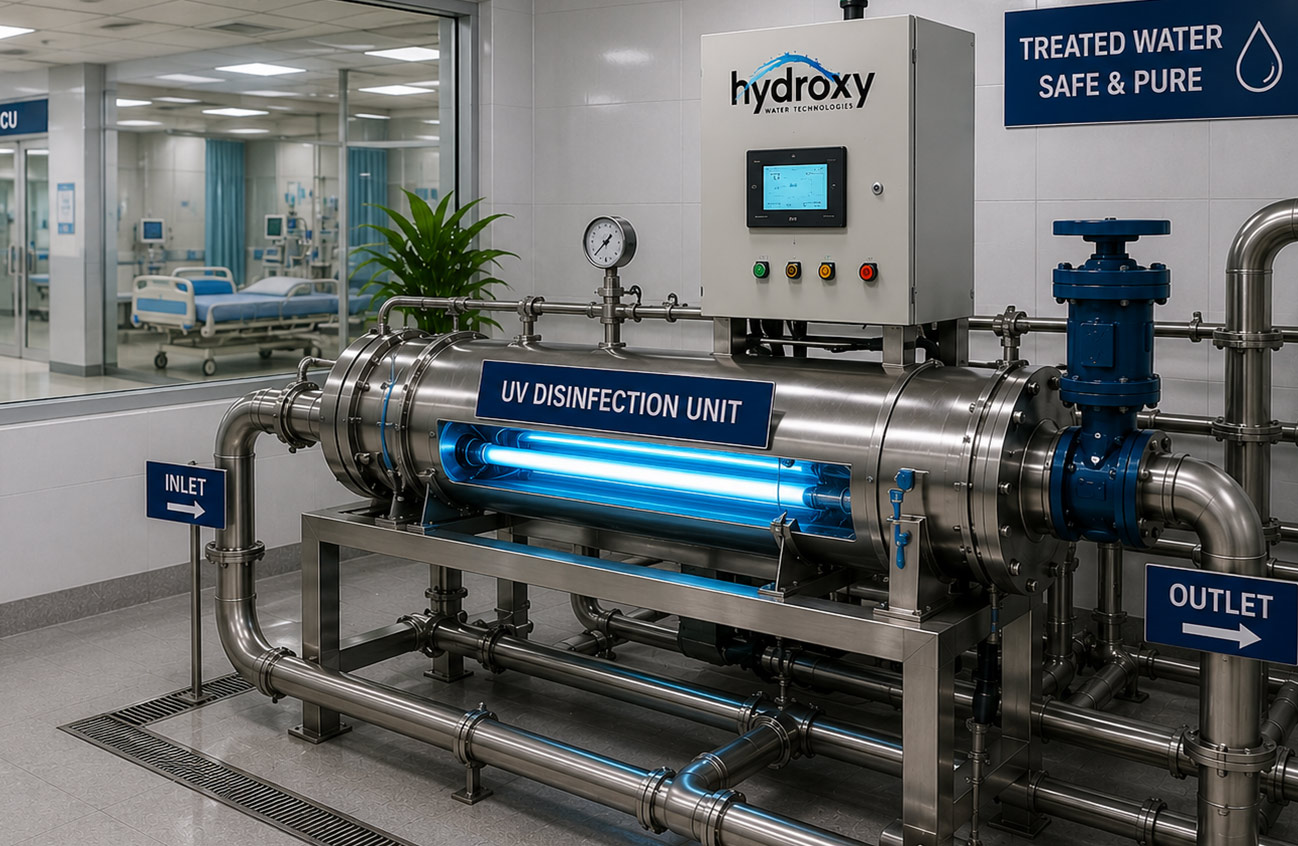
A Hydroxy UV Disinfection System may include:
- Stainless-Steel UV Reactor
- UV-C Lamp
- Quartz Sleeve
- Electronic Ballast / Power Supply
- UV Intensity Sensor, where required
- Flow Monitoring
- Lamp-Hour Counter
- Control Panel
- Low-UV Alarm
- Automatic Shut-Off / Interlock, where required
The system configuration is selected according to the required flow and disinfection objective.
How It Works - From Water to UV-Disinfected Water
Hydroxy evaluates flow, turbidity, UV transmittance and other parameters that influence UV performance.
The reactor and lamp configuration are selected according to required flow and UV dose.
Water flows through the UV chamber surrounding the quartz-protected lamp.
Microorganisms receive the required ultraviolet energy during passage through the reactor.
Treated water exits the chamber without requiring a chemical reaction or extended contact tank.
Lamp status, UV intensity and operating hours can be monitored to support reliable system performance.
Why Water Quality Matters - UV Must Reach the Microorganism
UV light must penetrate the water effectively to provide reliable disinfection. High levels of:
- Turbidity
- Suspended Solids
- Colour
- Iron
- Manganese
- Scale Deposits on the Quartz Sleeve
can reduce UV transmission or shield microorganisms from exposure.
For this reason, Hydroxy evaluates the incoming water quality before selecting and sizing the UV system. Effective UV disinfection starts with water that allows UV light to pass through it.
Automatic & Manual Operation - Designed Around Your Operating Requirement
Suitable where filtration and backwashing are controlled directly by an operator.
Automatic control valves can manage filtration, backwashing and rinsing cycles with reduced manual intervention.
The appropriate configuration depends on system capacity, operating hours and maintenance requirements.
UV Lamp & Quartz Sleeve Maintenance - Maintaining UV Output Is Essential
UV system performance gradually changes as lamps age and deposits build up on quartz sleeves. Regular maintenance may include:
- UV Lamp Replacement
- Quartz Sleeve Inspection
- Quartz Sleeve Cleaning
- UV Sensor Inspection
- Seal & O-Ring Inspection
- Lamp-Hour Monitoring
- Electrical System Check
- UV Intensity Verification
Hydroxy can support scheduled maintenance and replacement requirements to help maintain dependable disinfection performance.
Typical Applications
Hydroxy UV Disinfection Systems can be used for:
- Drinking Water
- Residential Water Supply
- Hotels & Resortsv
- Hospitals & Healthcare Facilities
- Schools & Institutions
- Food & Beverage Water
- Commercial Water Systems
- Industrial Process Water
- High-Purity Water Systems
- Treated-Water Reuse Applications
Why Hydroxy? - Reliable UV Disinfection Starts With Correct Sizing
A UV system should not be selected simply by pipe size or nominal lamp wattage. Effective disinfection depends on the relationship between: Water Quality + UV Transmittance + Flow Rate + UV Intensity + Exposure Time
If flow is too high or water transmits UV poorly, the effective UV dose can fall below the required treatment level.
Hydroxy designs UV Disinfection Systems around the actual water characteristics and operating conditions to provide reliable microbial control and straightforward operation.
Our approach begins with one essential question: "How much UV exposure does your water require at its maximum flow?"
Key Benifits
UV inactivates microorganisms without continuously adding disinfectant chemicals to the treated water.
Disinfection occurs as water passes through the UV chamber, without requiring extended reaction time.
UV treatment does not remove beneficial minerals or substantially alter TDS, taste or water chemistry.
Properly designed UV systems provide an effective barrier against susceptible bacteria, viruses and other microorganisms.
UV reactors provide high-rate disinfection within a relatively small installation footprint.
Lamp status, operating hours and UV intensity can be integrated with alarms and control systems.
Hydroxy sizes UV systems according to water quality, UV transmittance, required dose and peak flow rate rather than selecting only by nominal pipe size.
UV does not remove: Suspended Solids, Hardness, TDS, Iron and Sediment
Its purpose is microbiological disinfection. For reliable operation, water entering the UV system should therefore have suitable clarity and transmission characteristics.