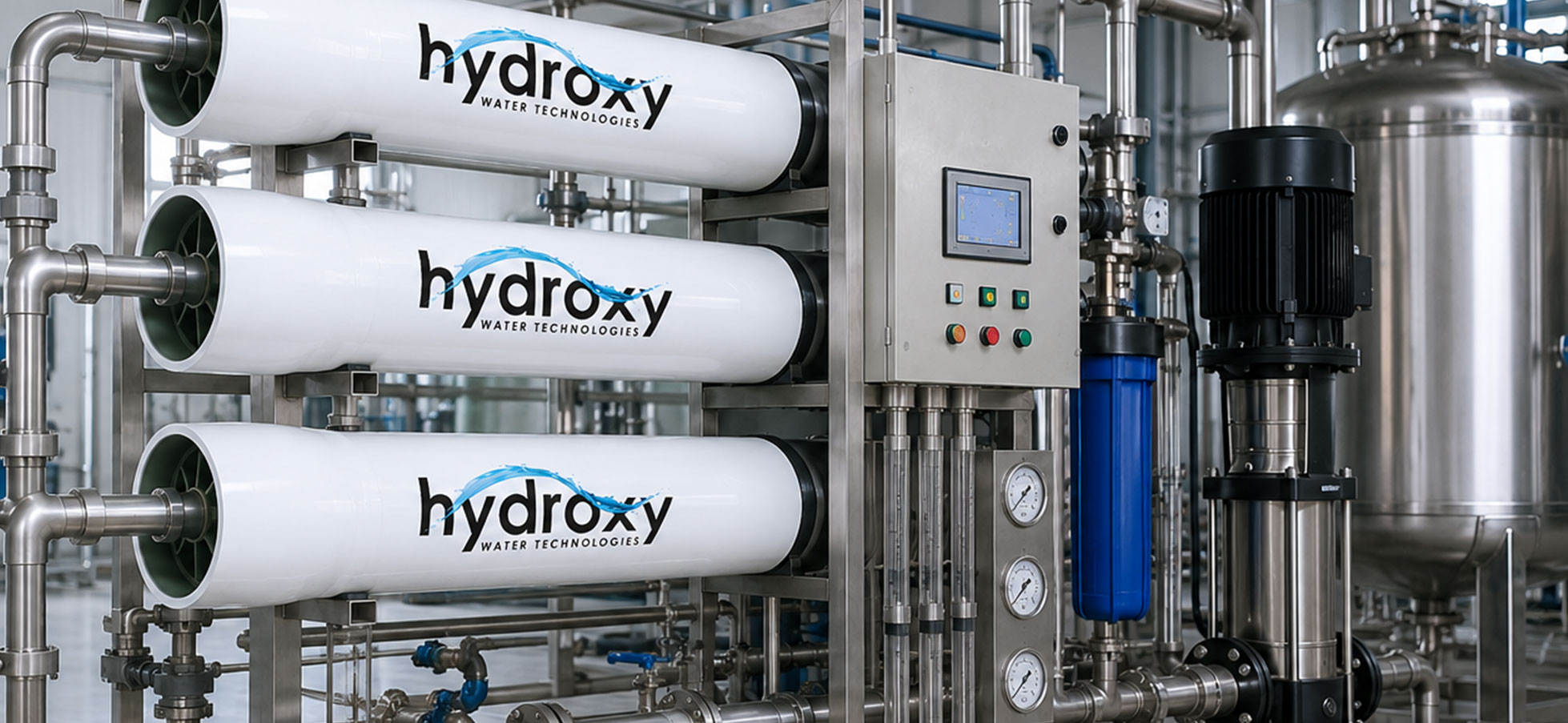
High Recovery RO Systems
Hydroxy designs High Recovery Reverse Osmosis systems to maximise treated-water production from available feed water while controlling scaling, fouling and concentrate generation—engineered for demanding commercial, industrial and water-reuse applications.
High Recovery RO Systems
Conventional Reverse Osmosis systems divide incoming feed water into two streams treated permeate and concentrated reject. When water availability, wastewater disposal or operating efficiency becomes critical, improving the percentage of feed water converted into useful permeate can significantly improve the overall water balance.
High Recovery RO systems are engineered to increase usable water production while minimising concentrate generation, without compromising membrane reliability or required product-water quality.
Achieving higher recovery, however, increases the concentration of dissolved salts and scaling constituents within the membrane system. Successful design therefore requires careful control of water chemistry, pre-treatment, membrane configuration, hydraulic conditions, recovery staging and process automation.
Hydroxy Water Technologies designs High Recovery RO solutions around your feed-water analysis, existing water balance, required permeate quality, plant capacity, target recovery and operating conditions—creating an integrated membrane process designed for efficient and dependable long-term operation.

More Treated Water From Available Resources
Large commercial and institutional facilities can consume substantial quantities of treated water every day. Improving RO recovery can help make better use of available water while reducing the amount of reject requiring discharge or further treatment.
Hydroxy develops high-recovery RO solutions around facility demand, incoming water quality and required treated-water specifications.
- Hotels & Resorts
- Hospitals & Healthcare Facilities
- Large Residential Communities
- Commercial Campuses
- Institutional Facilities
- Central Utility Water Systems
High-Recovery Treatment for Water-Intensive Operations
Industrial facilities often operate under increasing pressure to reduce freshwater consumption, wastewater generation and overall treatment costs.
Hydroxy engineers High Recovery RO systems to maximise useful permeate production while carefully managing scaling potential, membrane loading, reject concentration and operating reliability..
- Manufacturing Facilities
- Process Water
- Boiler Feed Water
- Cooling Tower Make-Up
- Food & Beverage Processing
- Pharmaceutical & Process Industries
- Wastewater Reuse/li>
- Industrial Utility Water
Engineered Around Your Recovery Target
Achieving higher RO recovery is not simply a matter of forcing more water through the membranes.
As more permeate is recovered, dissolved salts and sparingly soluble constituents become increasingly concentrated in the remaining stream. This increases the potential for scaling, fouling and membrane performance loss if the system is not correctly engineered.
Hydroxy evaluates the complete water chemistry and operating environment before determining an appropriate recovery strategy.
Important design parameters may include:
- Total Dissolved Solids(TDS) & Hardness
- Calcium & Magnesium, Alkalinity, Silica
- pH, Sulphates, Chlorides ,Iron & Manganese
- Turbidity, Organic Loading
- Scaling Potential
- Required Permeate Quality
- Feed & Permeate Flow
- Target System Recovery
- Feed-Water Temperature
Depending on the application, a CCRO solution may incorporate:
- Multimedia / Pressure Sand Filtration
- Activated Carbon Filtration
- Ultrafiltration
- Water Softening
- Micron Cartridge Filtration
- Antiscalant & Chemical Dosing
- pH Adjustment
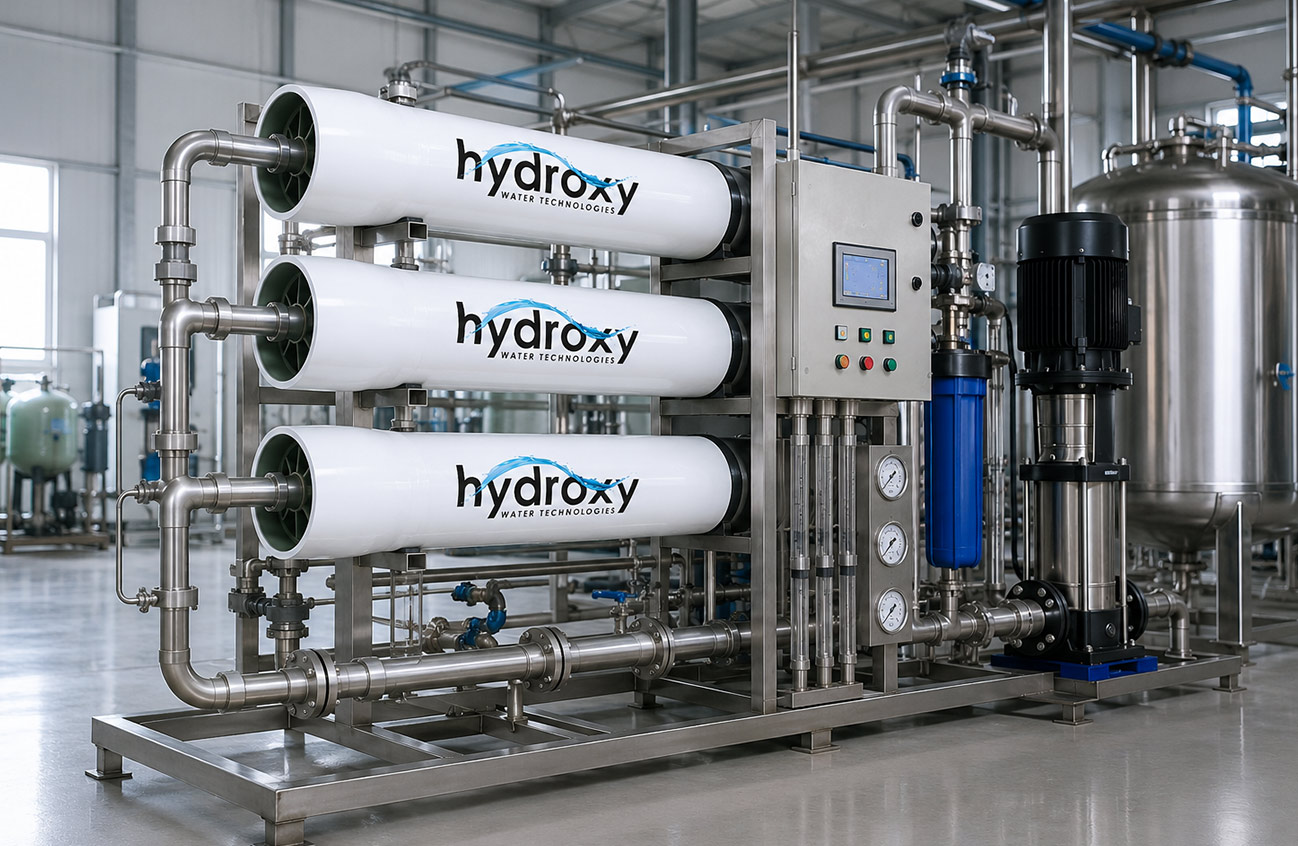
- Multi-Stage RO Membrane Arrays
- Interstage Pressure Management
- Concentrate / Reject Recovery
- Secondary RO Treatment
- Conductivity & TDS Monitoring
- Flow & Pressure Monitoring
- Automated Flushing
- PLC-Based Process Controls
- Cleaning-in-Place Systems
*The objective is to achieve the highest practical recovery for the specific feed-water chemistry while protecting membrane performance and maintaining the required product-water quality.
How It Works?!
Hydroxy follows a structured engineering approach to identify where water is being lost, determine practical recovery limits and configure the appropriate membrane treatment strategy.
We understand the water source, feed-water chemistry, plant capacity, operating hours and required product-water quality.
Feed, permeate and reject streams are evaluated to understand the existing or proposed water balance and identify opportunities for improved recovery.
Hardness, silica, alkalinity, salts, suspended matter and other relevant parameters are evaluated to understand membrane scaling and fouling risks at higher concentration levels.
Filtration, softening, Ultrafiltration, chemical conditioning or other appropriate processes are selected to prepare the feed water for high-recovery membrane operation.
Pre-treated water passes through the RO membrane system, producing purified permeate while concentrating dissolved constituents in the reject stream.
Membrane staging, concentrate management and operating parameters are engineered to recover additional usable water while maintaining suitable membrane conditions.
Where feed-water chemistry allows, a secondary treatment stage may be used to recover additional permeate from the primary RO concentrate.
Pressure, flow, conductivity, recovery and other critical operating parameters can be monitored and controlled through automated systems.
The complete high-recovery system is installed, integrated and commissioned against the specified capacity, recovery and treated-water requirements.
Hydroxy supports continued performance through preventive maintenance, membrane cleaning, water-quality monitoring, consumables and system optimisation.
Why Hydroxy?
High Recovery RO requires careful integration of water chemistry, membrane design, pre-treatment, hydraulics and process control.
Pursuing higher recovery without understanding these factors can increase scaling potential, accelerate membrane fouling, reduce permeate output and increase operating costs.
Hydroxy approaches high-recovery RO as a complete water-balance engineering challenge, not simply as an equipment upgrade.
Our team combines water chemistry expertise, membrane engineering, process integration, automation, practical site execution and lifecycle support to develop systems that balance water recovery with dependable long-term operation.
Whether you are developing a new plant or looking to improve an existing RO system, our approach begins with one fundamental question: "How much more usable water can we safely recover from your feed stream?"
Key Benifits
Improved recovery reduces the proportion of incoming water leaving the system as RO concentrate, helping lower the volume requiring discharge, reuse or further treatment.
Recovering more permeate from the same feed-water supply can improve the overall water balance of commercial and industrial facilities.
Appropriate pre-treatment, scaling control and operating strategies help support higher recovery while protecting membrane performance.
Depending on the application, Hydroxy can engineer multi-stage membrane treatment, reject recovery, secondary RO and other recovery optimisation approaches around the actual feed-water conditions.
Flow, pressure, conductivity, recovery and other critical parameters can be integrated with automation and instrumentation for greater operational visibility and control.
Hydroxy determines the treatment configuration according to feed-water analysis, scaling potential, required permeate quality, plant capacity and recovery objective rather than applying a predetermined recovery percentage.