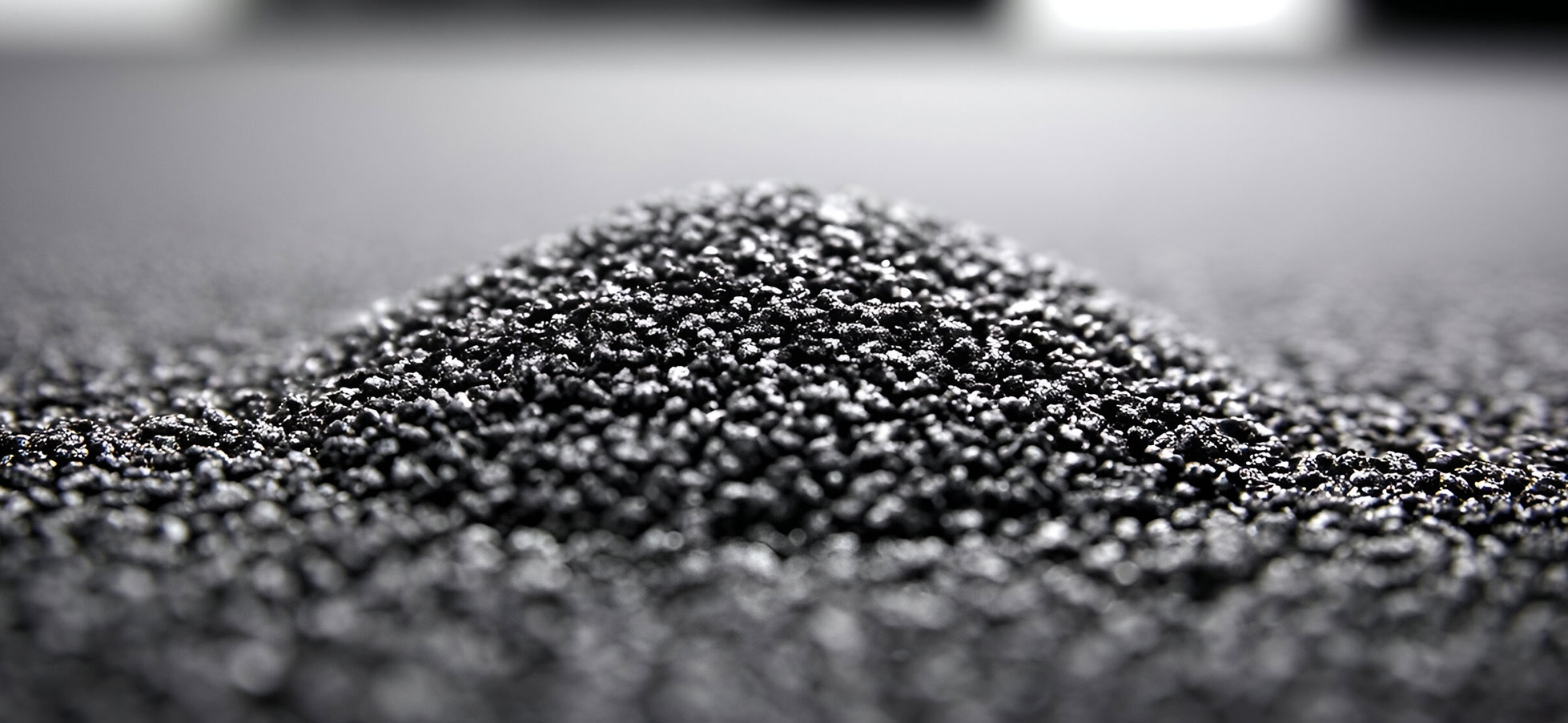
Activated Carbon Filters
Hydroxy designs Activated Carbon Filters to reduce chlorine, taste, odour, colour and selected organic contaminants providing reliable water polishing and effective protection for downstream treatment systems.
Activated Carbon Filters
Activated Carbon Filtration is a water-treatment process based primarily on adsorption, where selected dissolved contaminants attach to the highly porous surface of activated carbon.
The large internal surface area of activated carbon makes it particularly effective for reducing free chlorine, taste, odour, colour and selected organic compounds from water.
Hydroxy Water Technologies designs Activated Carbon Filters according to incoming water quality, contaminant load, required flow, contact time and application requirements.
Activated carbon filtration can be used as a dedicated polishing stage or as pre-treatment where chlorine and organic contaminants may affect downstream equipment.

Activated Carbon Filtration Principle
Unlike conventional sand filtration, which primarily removes suspended particles, activated carbon works mainly by attracting and retaining selected dissolved contaminants on the carbon surface.
Incoming water is evenly distributed through the carbon media bed.
As water passes through the porous activated carbon, selected contaminants are adsorbed onto the internal surface of the media.
Activated carbon reacts with and reduces free chlorine, making it particularly useful where downstream treatment equipment requires dechlorinated water.
Taste, odour, colour and selected organic contaminants are reduced according to the feed-water quality and carbon characteristics.
Periodic backwashing loosens the media bed and removes accumulated suspended material.
Over time, adsorption capacity becomes exhausted and the activated carbon must be replaced to maintain treatment performance. Water → Activated Carbon Media → Adsorption → Polished Water
Engineered Around Adsorption Performance - Carbon Quality Alone Does Not Determine Filter Performance
An Activated Carbon Filter must provide sufficient contact between the water and the carbon media. Hydroxy considers important design parameters such as:
- Free Chlorine
- Colour
- Taste & Odour
- Organic Contaminants
- Turbidity
- Required Flow Rate
- Contact Time
- Carbon Type & Quality
- Media Bed Depth
- Vessel Diameter
- Operating Pressure
- Backwash Requirement
- Required Treated-Water Quality
These parameters determine the appropriate carbon media quantity, vessel size, filtration velocity and operating configuration. The objective is to provide sufficient adsorption capacity and contact time for the specific contaminants being treated.
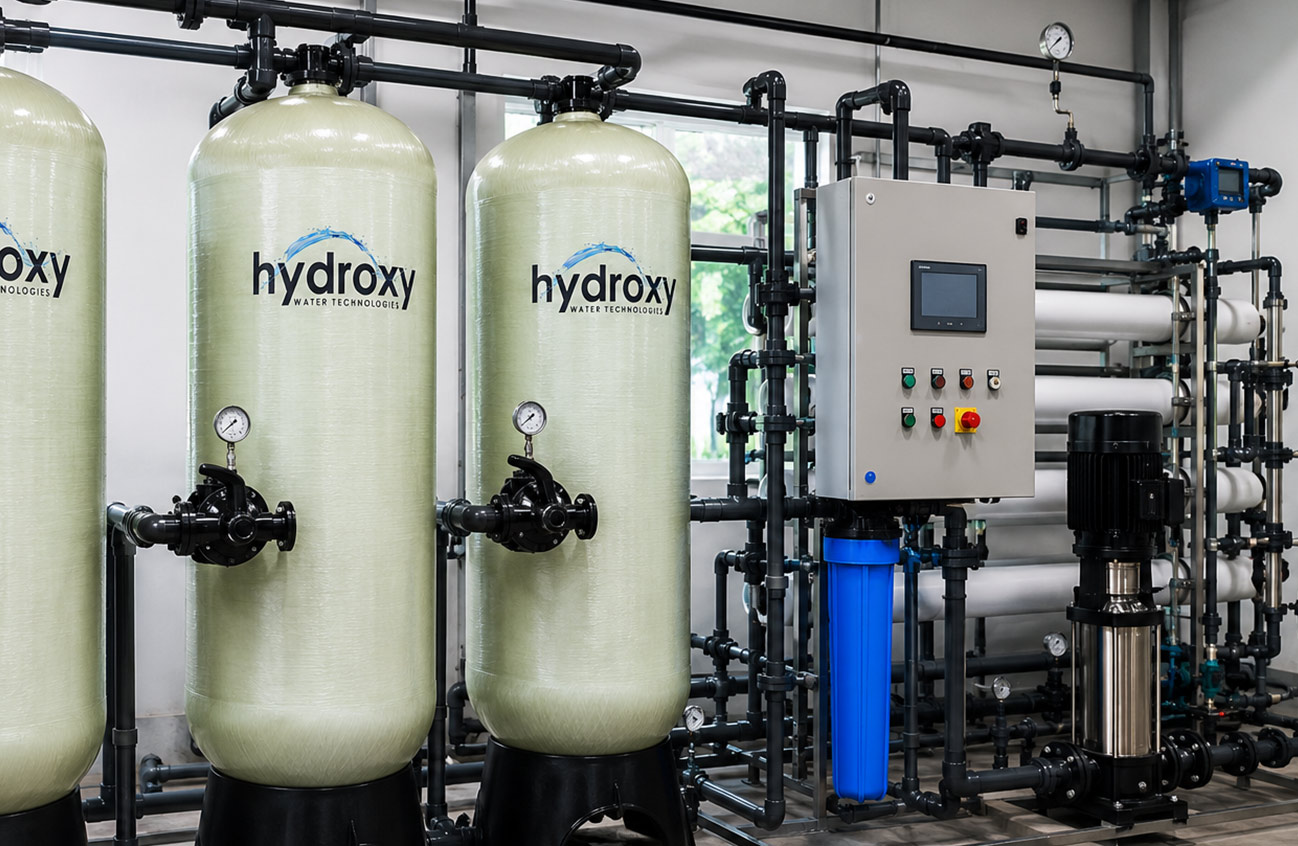
Tertiary Treatment Technologies
Reduces residual suspended solids and turbidity.
Provides additional polishing for colour, odour and selected organic contaminants.
Provides finer particle removal and protects downstream treatment equipment.
Provides membrane-based removal of fine suspended particles, colloidal matter and microorganisms.
Where significant dissolved-solids reduction is required, RO can be incorporated as an advanced treatment stage.
UV or controlled chemical disinfection can be incorporated to support final microbiological water quality.
These parameters determine the appropriate vessel size, media configuration, hydraulic loading and backwash requirements. The objective is to provide effective filtration while maintaining reliable flow and manageable operating pressure.
Typical Applications
Activated Carbon Filters are commonly used for:
- Chlorine Reduction
- Taste & Odour Improvement
- Colour Reduction
- Organic Contaminant Reduction
- Municipal Water Polishing
- Commercial Water Treatment
- Industrial Process Water
- Drinking-Water Pre-Treatment
- Membrane-System Pre-Treatment
- Utility Water Treatment
How It Works - From Contaminated Water to Polished Water
The incoming water is evaluated to determine chlorine, organic load, colour, odour and other relevant characteristics.
Activated carbon type and quantity are selected according to the treatment requirement.
Vessel size, media depth, flow rate and contact time are engineered around the application.
Water passes through the carbon bed where selected contaminants are retained on the carbon surface.
The media bed is periodically backwashed to remove trapped suspended solids and maintain hydraulic performance.
Carbon performance is monitored and the exhausted media is replaced when adsorption capacity declines.
Automatic & Manual Operation
Hydroxy Activated Carbon Filters can be configured for:
Suitable where filtration and backwashing cycles are controlled by the operator.
Control valves can automate service, backwash and rinse cycles, reducing routine manual intervention.
The appropriate configuration depends on capacity, operating hours and plant automation requirements.
Activated Carbon Media
Activated carbon is available in different raw-material types and grades, each with different adsorption characteristics. Media selection depends on:
- Target Contaminants
- Water Chemistry
- Required Chlorine Reduction
- Organic Loading
- Contact Time
- Operating Conditions
- Required Media Life
Hydroxy selects carbon media according to the actual treatment objective rather than treating activated carbon as a generic filter material.
Why Hydroxy? - Effective Carbon Filtration Depends on More Than Filling a Vessel With Carbon
The performance of an Activated Carbon Filter depends on the relationship between: Water Quality + Carbon Media + Contact Time + Flow Rate + Media Condition
A filter with insufficient carbon volume or excessive flow may provide inadequate contact time, while exhausted media can no longer deliver the required adsorption performance.
Hydroxy designs Activated Carbon Filters around actual operating conditions to provide reliable adsorption, consistent hydraulic performance and straightforward maintenance.
Our approach begins with one essential question: "What contaminants does the activated carbon need to adsorb?"
Key Benifits
Activated carbon is highly effective for reducing free chlorine from water.
Adsorption can reduce compounds responsible for undesirable taste and odour.
Activated carbon can remove or reduce many organic substances depending on their characteristics and the carbon media selected.
Removing chlorine and selected organic contaminants can help protect sensitive downstream treatment processes.
Periodic backwashing helps remove accumulated suspended material and maintain hydraulic performance.
Systems can be configured with manual or automatic valves according to plant requirements.
Hydroxy selects the carbon media, contact time, vessel size and operating flow according to the actual treatment requirement.
Activated Carbon Filtration is primarily an adsorption and polishing process. It is not intended as the primary process for removing hardness or reducing Total Dissolved Solids (TDS). Correct treatment technology should always be selected according to the specific water-quality problem.