Water Treatment Chemicals
Specialised chemistry for reliable water treatment, system protection and process performance.
Water Treatment Chemicals
Water-treatment chemicals help control scaling, corrosion, fouling, suspended solids, microorganisms, pH and other water-quality conditions that can affect treatment performance and equipment reliability.
Hydroxy supplies treatment chemicals for applications ranging from RO membrane protection and raw-water clarification to boiler, cooling-water and wastewater treatment.
Chemical selection is based on the water analysis, treatment process, target contaminant, equipment materials and operating conditions, helping ensure that the chemistry supports rather than interferes with the overall treatment system.
Products
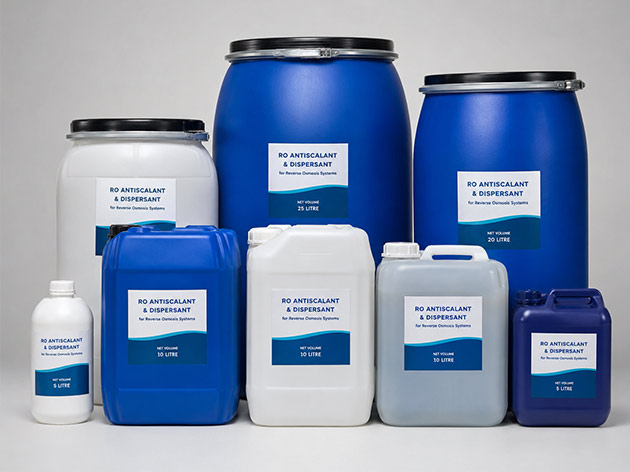
RO Antiscalants & Dispersants
RO antiscalants are dosed into membrane feed water to help control precipitation of scale-forming salts and maintain membrane performance. The appropriate formulation is selected according to feed-water chemistry, recovery and scaling potential.
Brackish-water RO, seawater RO, industrial RO, high-recovery RO, wastewater-reuse RO and process-water systems.
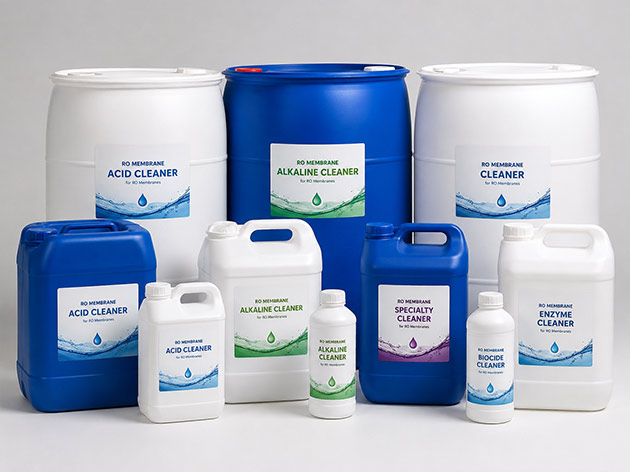
RO Membrane Cleaning Chemicals
Membrane cleaners are formulated to remove specific deposits and foulants accumulated during RO operation. Depending on the fouling condition, appropriate acidic, alkaline or speciality cleaning formulations may be selected.
Mineral scaling, organic fouling, biological deposits, metal deposits and general RO membrane cleaning.
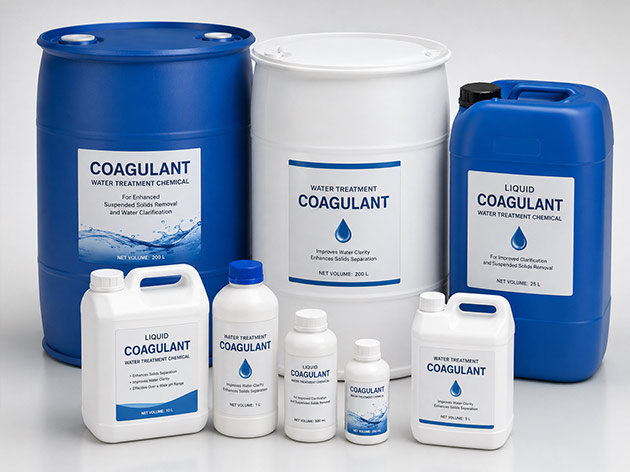
Coagulants
Coagulants destabilise fine suspended and colloidal particles so they can combine into larger, more easily separable particles. Both inorganic and organic coagulant chemistries may be selected according to water characteristics.
Raw-water clarification, surface-water treatment, industrial wastewater, colour removal, turbidity reduction and solids separation.
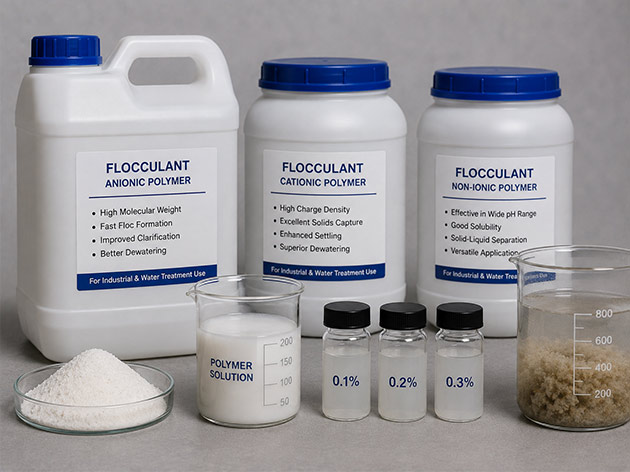
Flocculants & Polymers
Flocculants are high-molecular-weight polymers that help small destabilised particles form larger flocs, improving clarification and dewatering. Products can be selected according to ionic charge, molecular structure and wastewater characteristics.
Clarifiers, DAF systems, raw-water treatment, industrial wastewater, sludge thickening and sludge dewatering.
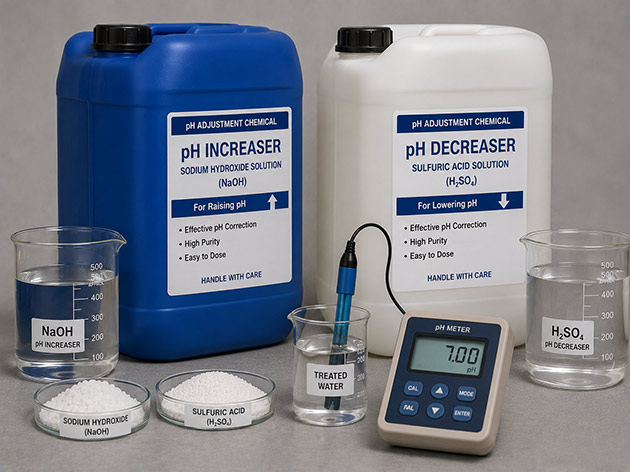
pH Adjustment Chemicals
pH correction chemicals are used to raise or lower water pH so downstream treatment processes can operate within the required range. Correct pH control can influence coagulation, disinfection, scaling, corrosion and biological treatment performance.
Raw-water treatment, RO pretreatment, neutralisation, ETP, STP, process water and industrial wastewater.
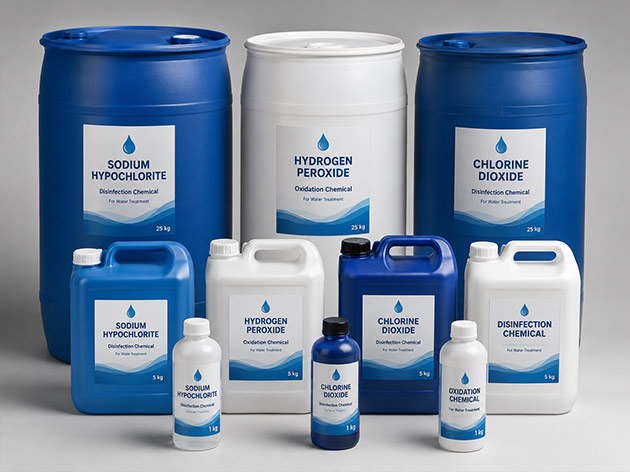
Disinfection & Oxidation Chemicals
Disinfection chemicals are used to control susceptible microorganisms and maintain hygienic water conditions where chemical disinfection is required. Appropriate oxidising chemistry may also assist selected oxidation processes.
Drinking water, treated-water storage, process water, cooling water, wastewater reuse and distribution systems.
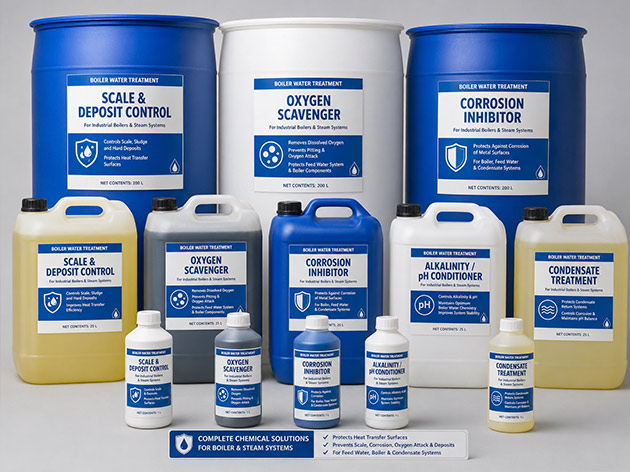
Boiler Water Treatment Chemicals
Boiler-water chemistry helps protect heat-transfer surfaces, feed-water systems and condensate circuits from conditions that can reduce efficiency or damage equipment. Product programmes may include: Scale & Deposit Control · Oxygen Scavenging · Corrosion Control · Alkalinity / pH Conditioning · Condensate Treatment
Industrial boilers, steam generators, process boilers and boiler-feed-water systems.
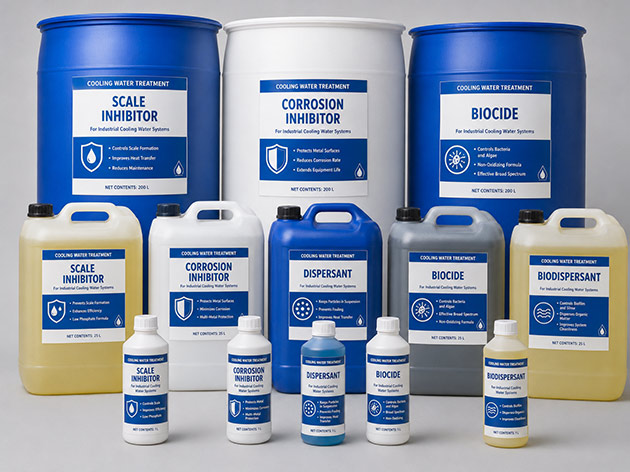
Cooling Water Treatment Chemicals
Cooling-water chemistry is used to maintain heat-transfer performance and protect recirculating water systems. Treatment can include: Scale Inhibitors · Corrosion Inhibitors · Dispersants · Biocides · Biodispersants
Cooling towers, open recirculating systems, closed-loop cooling systems and industrial cooling-water networks.
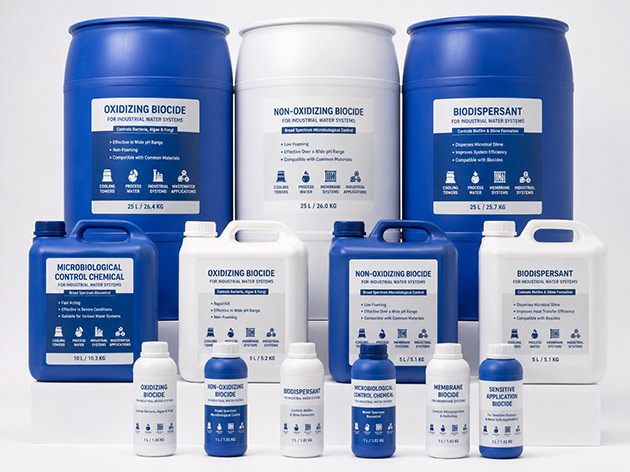
Biocides & Microbiological Control Chemicals
Biocides are selected to control bacteria, algae, fungi and other microorganisms that can contribute to slime, biofilm, fouling or deterioration of water quality. Oxidising or non-oxidising products may be selected according to application.
Cooling towers, process water, industrial water systems, membrane pretreatment and selected wastewater applications.
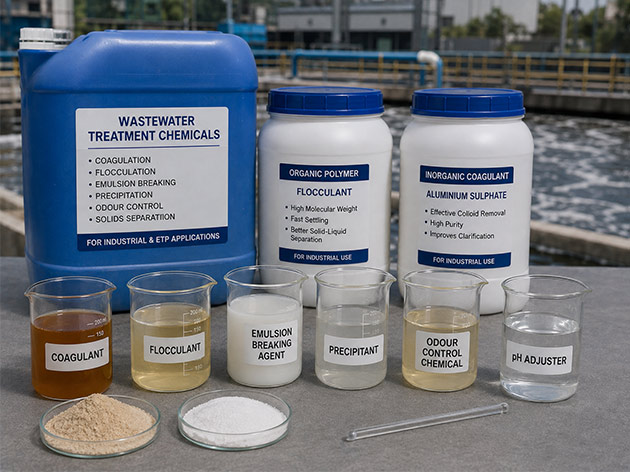
Wastewater Treatment Chemicals
Wastewater-treatment chemicals can support physical, chemical and biological treatment processes where contaminant characteristics require additional conditioning. Products may be selected for: Coagulation · Flocculation · Emulsion Breaking · Precipitation · Odour Control · Solids Separation
ETP, industrial wastewater, oily wastewater, process effluent and tertiary treatment.
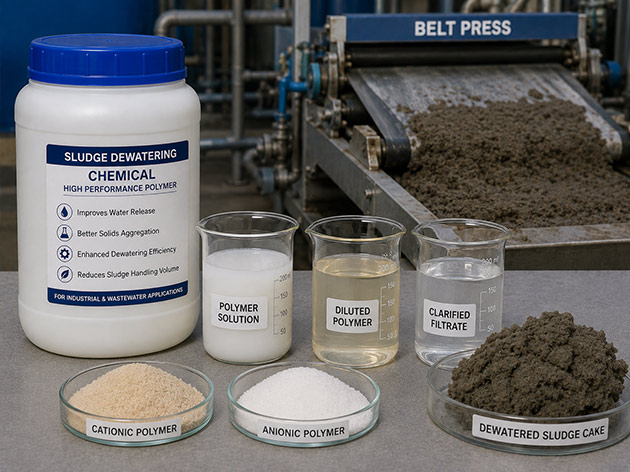
Sludge Dewatering Chemicals
Dewatering polymers help condition sludge before mechanical dewatering by improving solids aggregation and water separation. The appropriate polymer is selected according to sludge type, solids concentration and dewatering equipment.
Filter presses, centrifuges, belt presses, wastewater sludge and biological sludge.
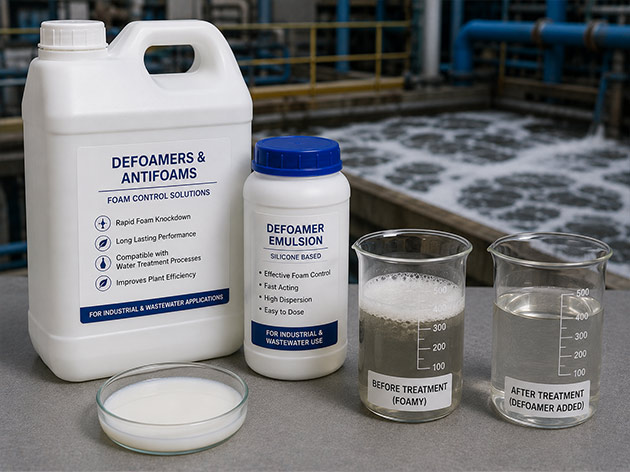
Defoamers & Antifoams
Defoamers and antifoams reduce or prevent excessive foam that can interfere with plant operation, tank capacity and solids separation.
ETP, biological treatment, industrial wastewater, process-water systems and sludge treatment.