
Rainwater Harvesting
Turn Rainfall Into a Valuable Water Resource.
Hydroxy helps homes, communities, commercial facilities and industries capture, store and make productive use of rainwater—reducing dependence on freshwater sources while creating more resilient and sustainable water systems.
Capture Water Where It Falls
Every roof, building and developed site receives water that can potentially be captured before it disappears into drains and stormwater networks.
Rainwater harvesting creates an opportunity to collect rainfall at the source, manage it responsibly and use it where appropriate instead of relying entirely on conventional freshwater supplies.
Capture the rain. Store it safely. Use it where it makes sense. By integrating rainwater into the overall water strategy of a property, organisations can turn a seasonal natural resource into a meaningful part of everyday water management.

Capture the Rain. Put It to Work.
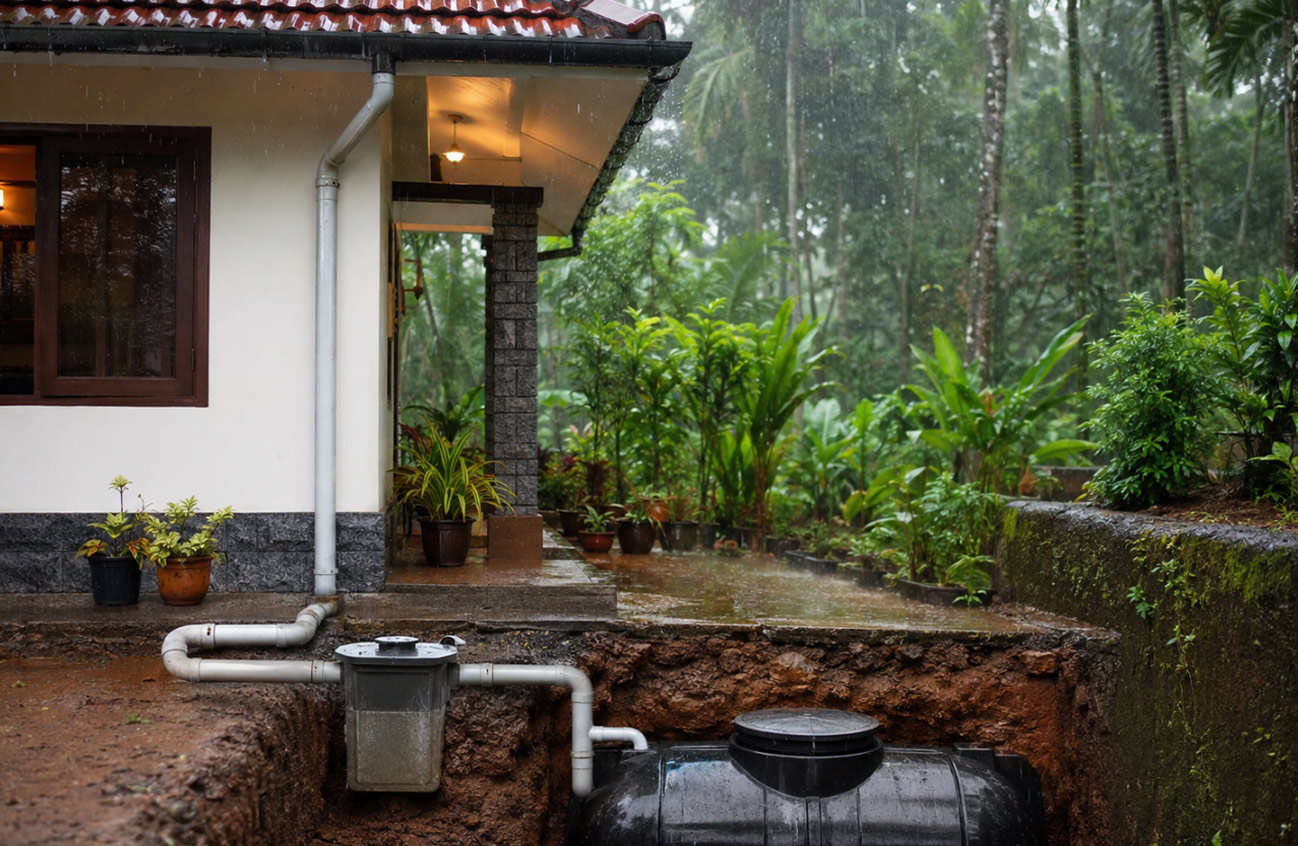
Rainwater harvesting is more than installing a storage tank. An effective system considers the entire journey of rainfall across the site.
Collect rainfall from suitable rooftops and catchment surfaces before it becomes uncontrolled runoff.
Divert initial runoff and unwanted debris to help protect stored-water quality.
Remove leaves, sediment and suspended material before or during storage.
Provide appropriately sized storage based on rainfall availability, catchment area and expected water demand.
Deliver harvested water to suitable applications through an appropriately designed pumping and distribution system.
Control overflow and excess rainfall responsibly when storage capacity is reached. Capture → Filter → Store → Use → Conserve
From Runoff to Resource - Changing What Happens After It Rains
Rainfall → Roof / Site → Drainage → Discharge. Rainwater rapidly leaves the property, while freshwater is brought back into the same site for everyday requirements.
Rainfall → Capture → Filtration → Storage → Productive Use.Instead of allowing every rainfall event to become runoff, suitable water can remain within the property and become part of its usable water supply.
Rainwater harvesting turns an occasional weather event into an opportunity for long-term water conservation.
Where Rainwater Harvesting Creates Opportunity
Large rooftops and common areas create opportunities to capture rainfall for landscaping, flushing and other appropriate shared requirements.
Reducing dependence on freshwater for these uses can make rainwater part of a more sustainable building-water strategy.
Hospitality facilities often combine significant roof areas with ongoing demand for landscaping, cleaning and utility water. Rainwater harvesting can help convert seasonal rainfall into a supplementary water resource for appropriate applications.
Offices, educational campuses, hospitals and public facilities can integrate rainwater storage with their overall water infrastructure to reduce dependence on external supplies for suitable non-potable demands.
Factories, warehouses and industrial campuses can have substantial roof catchment areas. Captured rainwater can be evaluated for suitable utility, cleaning, landscape or process-support requirements depending on the required water quality.

