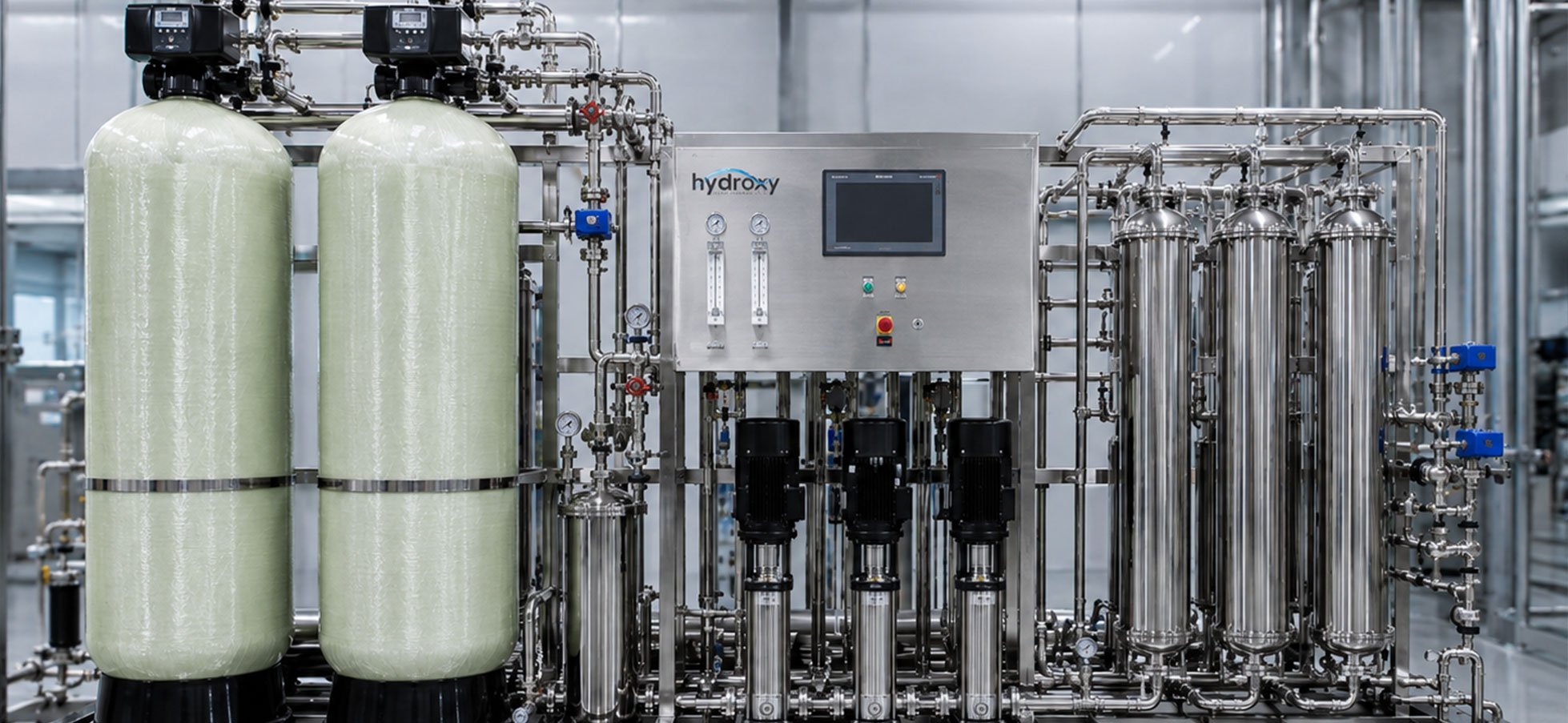
Mixed Bed Deionizers
Final-stage ion removal for exceptionally high-purity water. Hydroxy designs Mixed Bed Deionizers using intimately mixed cation and anion exchange resins to remove residual dissolved ions and deliver very low-conductivity water for demanding high-purity applications.
Mixed Bed Deionizers
Mixed Bed Deionization is an advanced ion-exchange process used to produce high-purity water by removing residual dissolved ionic contaminants.
Unlike separate cation and anion vessels, a mixed-bed deionizer contains strong-acid cation resin in the hydrogen form and strong-base anion resin in the hydroxide form mixed together within the same vessel. This creates repeated cation and anion exchange throughout the resin bed, providing highly effective final ionic polishing.
Mixed beds are commonly used as a final polishing stage where very low conductivity and high water purity are required.
Hydroxy designs Mixed Bed Deionizers according to feed-water quality, ionic load, required product-water specification, flow capacity and operating requirements.

Mixed Bed Deionization Principle
Cation + Anion Exchange in One Vessel. The principle of Mixed Bed Deionization is to bring water into continuous contact with both cation and anion exchange resins throughout a single mixed resin bed.
The cation resin removes positively charged ions such as calcium, magnesium and sodium by exchanging them with hydrogen ions.
The anion resin removes negatively charged ions such as chlorides, sulphates, bicarbonates and other anions by exchanging them with hydroxide ions.
The released hydrogen and hydroxide ions combine to form water, while residual ionic contaminants are retained by the resins.
Because cation and anion resins are intimately mixed, the exchange process is repeated throughout the bed, enabling very high levels of ionic polishing. Feed Water → Mixed Cation + Anion Resin → Residual Ions Removed → High-Purity DI Water
Engineered Around Your Final Water Purity - Mixed Bed Performance Depends on Feed Quality and Ionic Load
A Mixed Bed Deionizer should not be sized only according to litres per hour. Hydroxy evaluates important parameters including:
- Feed-Water Conductivity
- Total Dissolved Ionic Load
- pH, Hardness
- Silica , Sodium, Chlorides, Sulphates
- Required Product-Water Conductivity
- Required Resistivity
- Required Flow Rate
- Daily Water Demand
- Resin Operating Capacity
- Regeneration / Replacement Requirement
These parameters determine the appropriate resin quantity, vessel size, service capacity and operating cycle. The objective is to provide the level of ionic polishing required by the final application without unnecessary resin exhaustion or operating cost.
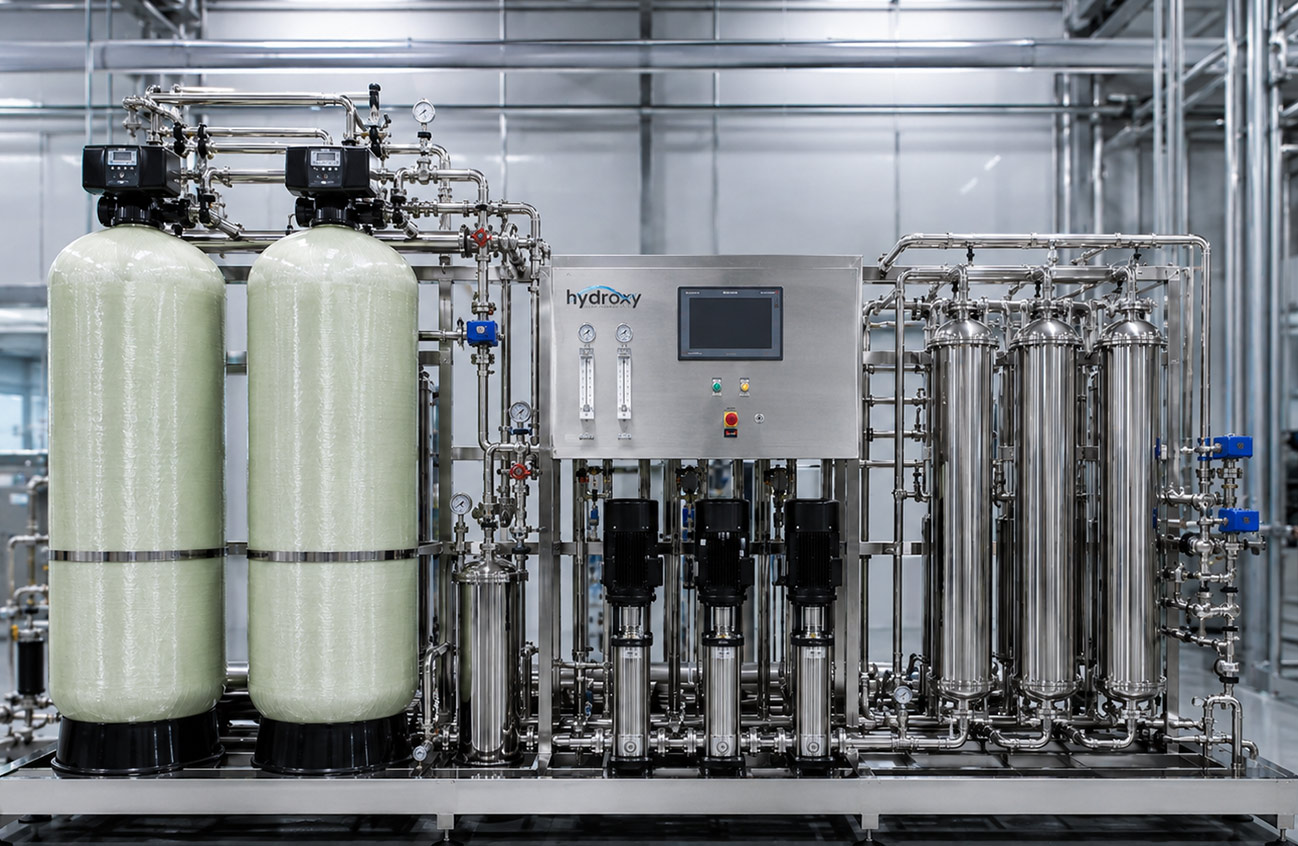
Working Mixed Bed vs Polishing Mixed Bed - Select the Configuration Around the Feed Water
A working mixed bed can provide deionization where the incoming ionic load is suitable for direct treatment within the mixed resin vessel. Mixed-bed resins are available for working-bed demineralization applications.
A polishing mixed bed is typically positioned after an upstream purification stage where most dissolved ions have already been removed. The mixed bed then removes the remaining ionic traces to achieve higher final water purity. High-purity mixed-bed products are specifically designed for polishing applications, including after RO. Hydroxy selects the configuration according to the incoming conductivity and required final product-water specification.
How It Works - From Low-Ion Feed Water to High-Purity DI Water
Incoming conductivity, ionic composition, required flow and target product-water purity are evaluated.
Water passes through a homogeneous mixture of cation and anion exchange resins.
Residual positively and negatively charged ions are continuously exchanged throughout the mixed resin bed.
The treated water leaves the vessel with substantially reduced ionic content.
Conductivity or resistivity is monitored to confirm final product-water quality and identify resin exhaustion.
Once the resin reaches exhaustion, the system is either regenerated or the resin is replaced, depending on the system configuration.
Mixed Bed Regeneration
In regenerable mixed-bed systems, the cation and anion resins must first be separated before they can be regenerated individually. DuPont describes regeneration of mixed-bed resin as involving separation of the two components by backwashing before separate regeneration. A typical regeneration sequence may include:
- Backwash & Resin Separation
- Cation Resin Regeneration
- Anion Resin Regeneration
- Rinsing
- Resin Remixing
- Final Rinse
- Return to Service
Correct separation, regeneration and remixing are important for restoring mixed-bed performance. For smaller or specialised applications, non-regenerable mixed-bed cartridges can also be used and replaced after exhaustion.
Typical Applications
Hydroxy Iron Removal Systems can be used for:
- Borewell Water
- Groundwater
- Residential Water Supply
- Apartments & Villas
- Hotels & Resorts
- Hospitals & Institutions
- Commercial Buildings
- Industrial Utility Water
- Process-Water Pre-Treatment
Typical Applications
Mixed Bed Deionizers are suitable where very low ionic contamination and high-purity water are required, including:
- High-Purity Process Water
- Boiler & Steam-System Polishing
- Pharmaceutical Process Utilities
- Laboratory Water
- Electronics Manufacturing
- Precision Manufacturing
- Final Polishing of Demineralised Water
- High-Purity Water Loops
Mixed-bed ion exchange is used across industrial demineralization, polishing and ultrapure-water applications.
Monitoring & Automation - Protect Final Water Quality
Depending on system requirements, Hydroxy Mixed Bed Deionizers can incorporate:
- Conductivity Monitoring
- Resistivity Monitoring
- Flow Monitoring
- Pressure Monitoring
- Tank-Level Controls
- Automatic Valve Sequencing
- Regeneration Controls
- PLC-Based Automation
- Product-Water Quality Alarms
Continuous quality monitoring helps identify resin exhaustion before final water quality falls outside the required specification.
Why Hydroxy? - Final Polishing Requires Precision
AMixed Bed Deionization is typically the final barrier between purified feed water and the required high-purity product-water specification. Its performance depends on the relationship between: Feed-Water Quality + Ionic Load + Resin Quality + Resin Ratio + Flow + Final Purity Requirement
Hydroxy designs Mixed Bed Deionizers around the actual operating conditions and final water-quality objective rather than treating the unit as a standard resin-filled vessel.
Our approach begins with one important question: "How pure does your final water need to be?"
Key Benifits
Mixed cation and anion resins provide intensive ionic polishing for demanding high-purity applications.
Mixed-bed ion exchange can produce very low-conductivity treated water when correctly selected and operated. DuPont notes conductivity below 0.1 µS/cm for one industrial mixed-bed resin in many applications, although actual performance depends on system and feed-water conditions.
The intimate mixture of cation and anion resins provides repeated ion-exchange contact throughout the bed.
Both cation and anion exchange functions are integrated within a single treatment vessel.
Mixed-bed systems can be configured with regenerable resin or replaceable non-regenerable resin depending on capacity and operating requirements.
Conductivity and resistivity monitoring can provide immediate visibility into treated-water quality and resin performance.
A Mixed Bed Deionizer is particularly valuable when very high final water purity is required. It should not be confused with ordinary filtration.
Filtration removes particles. Mixed-bed deionization removes residual dissolved ions. The system is therefore engineered around the final ionic purity requirement, not simply water clarity.