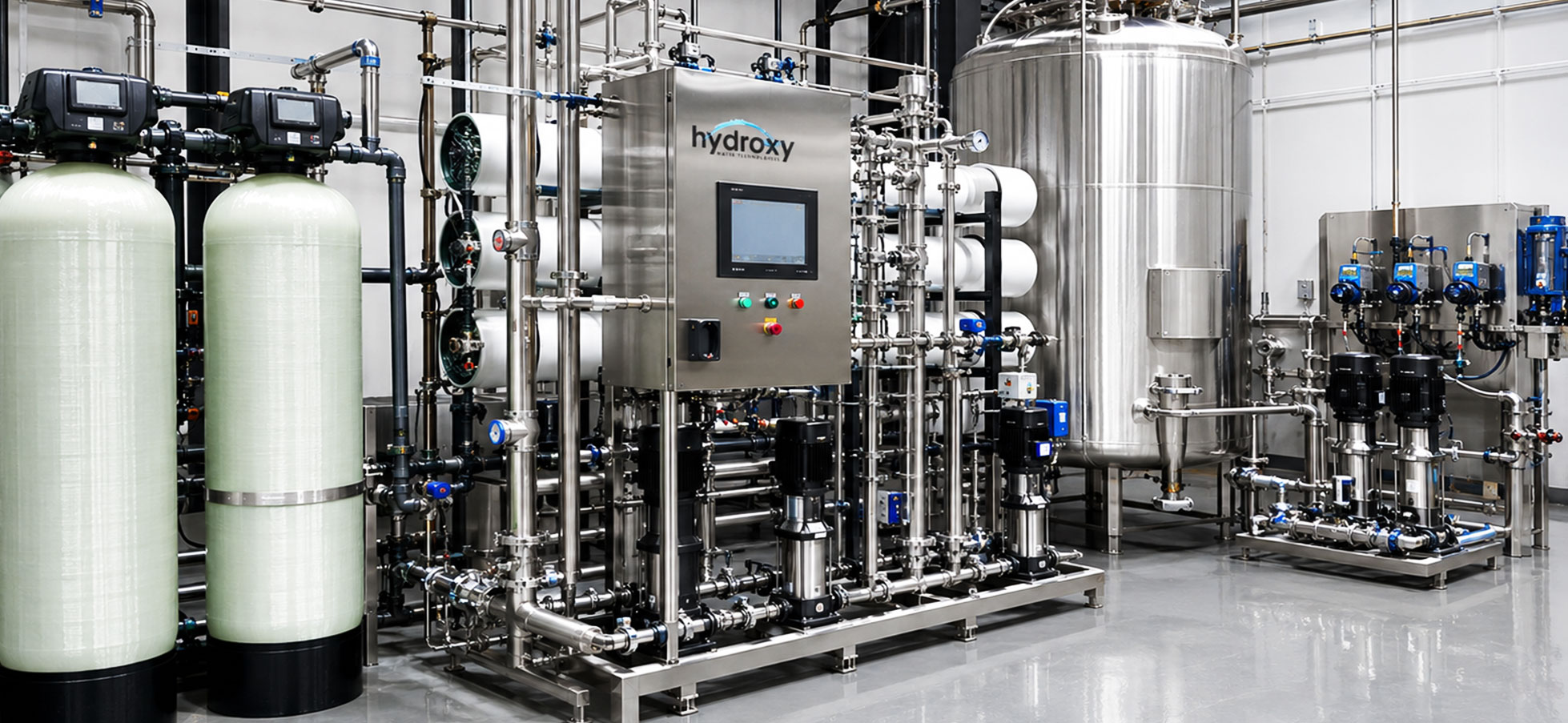
Boiler Feed Water Systems
Protect boilers with precisely treated feed water. Hydroxy designs Boiler Feed Water Systems to control hardness, dissolved minerals, silica and other water-quality parameters—helping reduce scale, corrosion and deposits while supporting reliable boiler and steam-system performance.
Boiler Feed Water Systems
Boilers require carefully conditioned water to operate reliably. Untreated or inadequately treated feed water can introduce hardness, dissolved salts, silica, suspended matter and dissolved gases into the boiler system. Under high temperature and pressure, these contaminants can contribute to:
- Scale Formation
- Boiler Deposits
- Corrosion
- Reduced Heat-Transfer Efficiency
- Increased Blowdown
- Higher Energy Consumption
- Steam-Quality Problems
- Equipment Damage & Unplanned Shutdowns
Hydroxy Water Technologies designs Boiler Feed Water Systems according to source-water chemistry, boiler pressure, steam demand, condensate-return percentage and required feed-water quality.
The objective is to provide a stable supply of correctly treated water that supports efficient steam generation and long-term boiler protection.

Boiler Feed Water Treatment Principle
Remove What Can Damage the Boiler Boiler feed-water treatment works by progressively removing or controlling contaminants before the water enters the boiler.
A typical treatment sequence may include: Raw Water → Pre-Filtration → Hardness / Mineral Reduction → High-Purity Treatment → Deaeration / Conditioning → Boiler Feed Water
Suspended solids and turbidity are reduced to protect downstream treatment equipment.
Calcium and magnesium are reduced to minimise scale-forming potential.
Where required, membrane or ion-exchange treatment reduces dissolved salts and minerals.
For applications requiring tighter water quality, silica is controlled to help reduce deposit and steam-purity problems.
Oxygen and other dissolved gases are reduced or chemically controlled where required to minimise corrosion.
Chemical dosing may be incorporated according to boiler operating requirements. The principle is simple: remove or control harmful impurities before they reach the boiler.
Engineered Around Your Boiler Operating Conditions - Feed-Water Quality Depends on the Boiler
A Boiler Feed Water System should not be selected only by litres per hour. As boiler pressure and operating demands increase, the required feed-water quality generally becomes more stringent. Hydroxy evaluates important parameters such as:
- Boiler Operating Pressure
- Steam Generation Capacity
- Raw-Water Quality
- Total Hardness
- TDS / Conductivity
- pH, Alkalinity
- Silica, Iron
- Dissolved Oxygen
- Condensate Return
- Make-Up Water Requirement
- Blowdown Requirement
- Required Feed-Water Quality
These parameters determine the appropriate treatment sequence, system capacity and level of purification required.
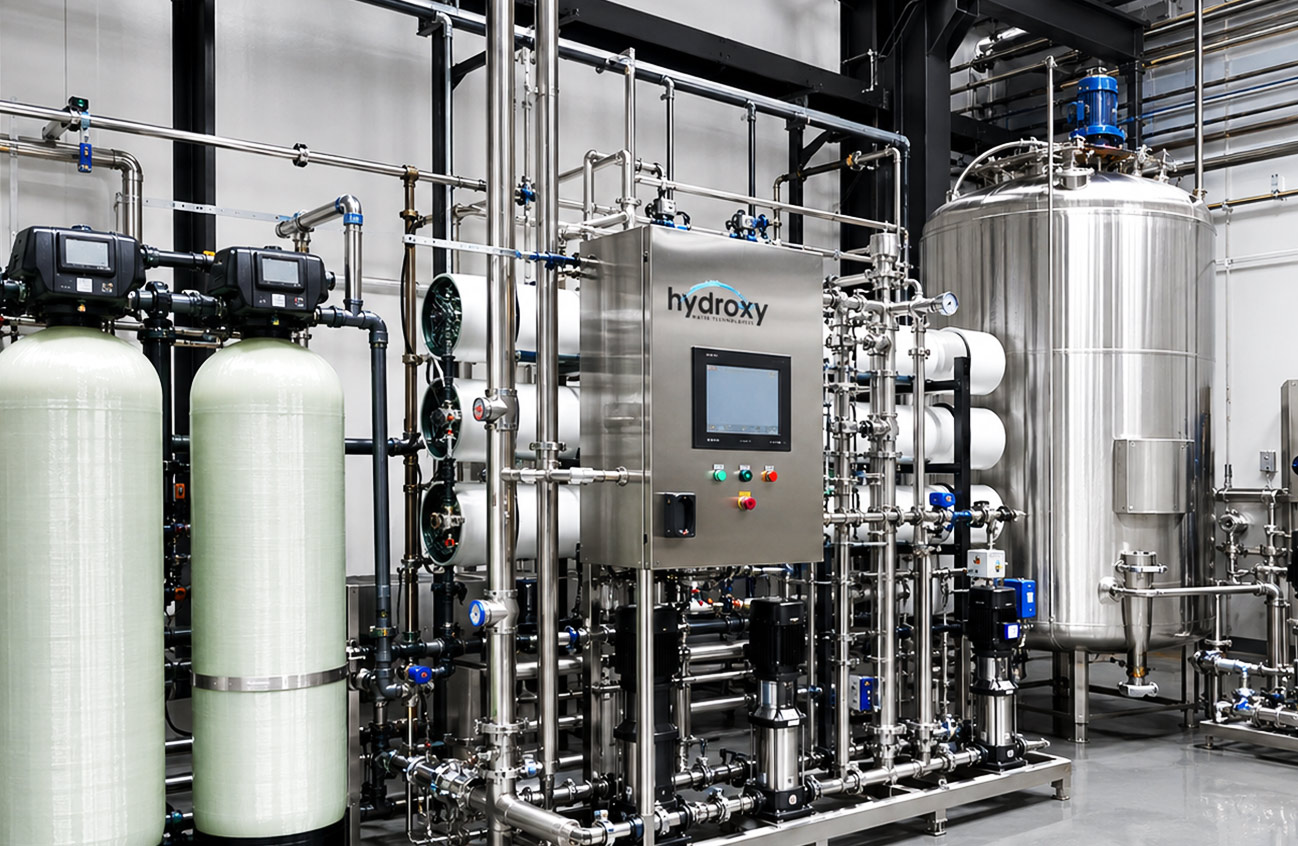
Treatment Configuration
Depending on feed-water quality and boiler requirements, a Hydroxy Boiler Feed Water System may incorporate:
- Pressure Sand / Multimedia Filtration
- Activated Carbon Filtration
- Water Softening
- Cartridge Filtration
- Reverse Osmosis
- Demineralisation
- Mixed Bed Polishing
- Deaeration
- pH Conditioning
- Oxygen-Scavenger Dosing
- Feed-Water Storage
- Conductivity Monitoring
- Automated Controls
The final treatment configuration is selected according to the actual boiler-feed specification, not a standard equipment package.
How It Works - From Raw Water to Boiler-Ready Feed Water
Hydroxy evaluates source-water quality, boiler pressure, steam demand and condensate-return conditions.
Suspended matter, chlorine, hardness and other contaminants are reduced as required.
Where necessary, RO, DM or polishing treatment is applied to reduce dissolved minerals and conductivity.
Dissolved gases and remaining chemical-treatment requirements are controlled before the water enters the boiler.
Treated water is stored and supplied to the boiler feed system according to operating demand.
Conductivity, hardness and other relevant parameters are monitored to maintain feed-water quality.