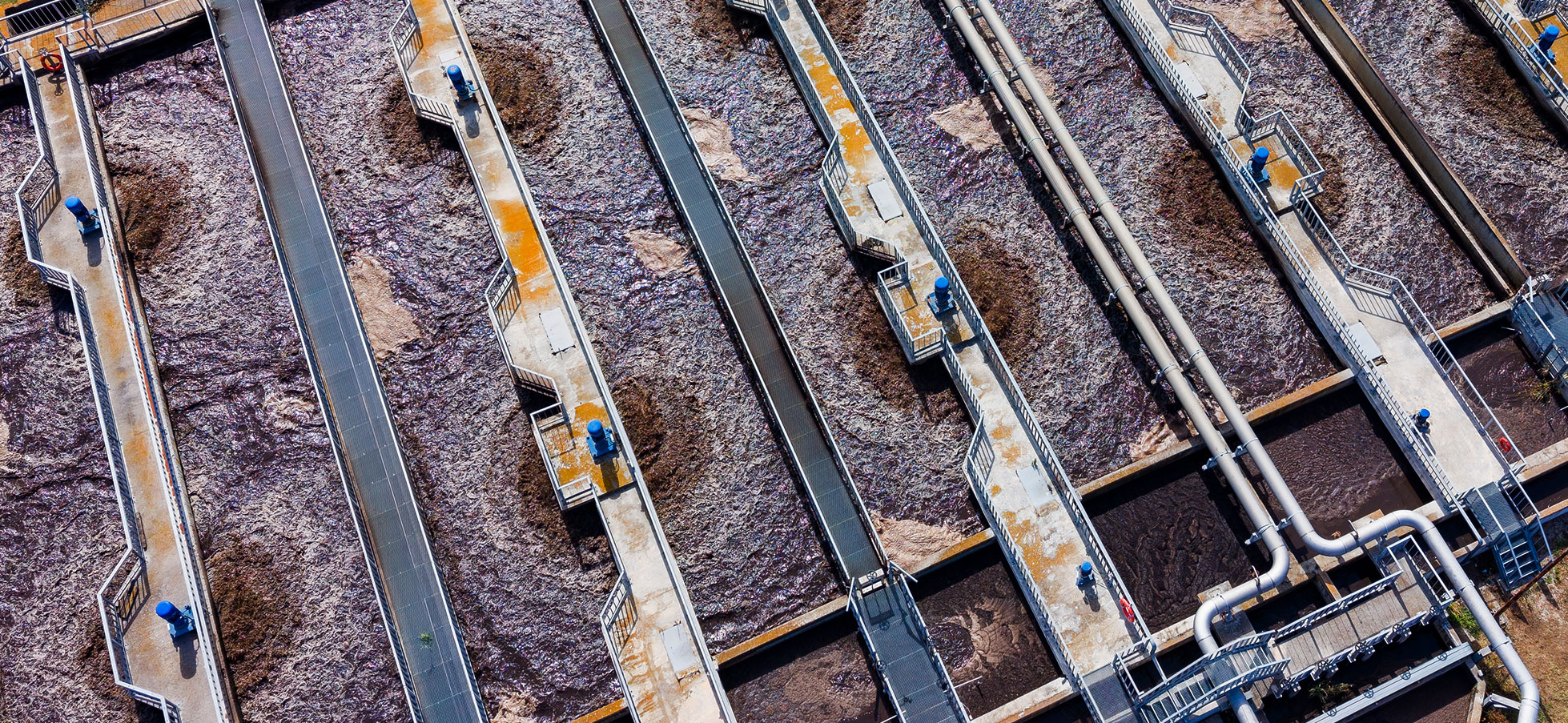
Sequencing Batch Reactors (SBR)
Hydroxy designs and integrates Sequencing Batch Reactor systems that combine biological treatment, aeration, settling and treated-water decanting within a controlled batch process—delivering flexible operation, efficient treatment and consistent treated-water quality.
Sequencing Batch Reactors (SBR)
Sequencing Batch Reactor is a biological wastewater treatment process in which treatment, aeration, biological reaction, settling and treated-water withdrawal take place sequentially within a controlled reactor cycle.
Instead of continuously moving wastewater through several separate treatment stages, an SBR processes a defined volume of wastewater through a programmed sequence of operating phases.
Within the reactor, microorganisms break down biodegradable organic pollutants during controlled biological treatment. Aeration and mixing support microbial activity, followed by a dedicated settling period that allows biological solids to separate from the treated water.
Once settling is complete, clarified treated water is removed through a controlled decanting process and the reactor becomes ready for the next treatment cycle.
Hydroxy Water Technologies designs SBR systems around wastewater characteristics, hydraulic flow, organic loading, batch volume, cycle duration, oxygen demand and required treated-water quality.
The result is a biological treatment process engineered for flexibility, process control, reliable treatment and automated operation.

SBR Principle
The defining advantage of SBR technology is its ability to perform several biological treatment functions through a controlled sequence within the same reactor.
Wastewater enters the reactor until the programmed operating volume is reached. Depending on the treatment objective, filling can occur under mixed, aerated or controlled biological conditions.
The wastewater undergoes biological treatment. Aeration supplies oxygen to microorganisms, allowing them to consume biodegradable organic pollutants and reduce the wastewater's biological load.
Aeration and mixing stop. The reactor remains hydraulically calm, allowing biological solids to settle toward the bottom while clarified treated water forms above the settled sludge.
A controlled decanter removes clarified treated water from the upper section of the reactor without significantly disturbing the settled biomass.
The reactor prepares for the next treatment cycle. Excess biological sludge can be removed during this stage to maintain the required biomass concentration and sludge age.
The timing and operating conditions of each phase are engineered around the actual wastewater characteristics and treatment objective.Fill → React → Settle → Decant → Repeat
Engineered Around Your Treatment Cycle - SBR Performance Is Defined by More Than Tank Capacity
A Sequencing Batch Reactor should not be designed simply according to daily wastewater volume.
Treatment performance depends on how effectively the hydraulic load, organic load, biological activity, oxygen transfer, settling characteristics and batch cycle work together.
The duration of each SBR phase must provide enough time for biological treatment while maintaining the required throughput of the overall system.
Hydroxy evaluates important process parameters such as:
- Average Wastewater Flow
- Peak Hydraulic Flow
- BOD — Biochemical Oxygen Demand
- COD — Chemical Oxygen Demand
- Total Suspended Solids — TSS
- Ammoniacal Nitrogen, where relevant
- pH , Organic Loading
- Mixed Liquor Suspended Solids — MLSS
- Dissolved Oxygen Requirement
- Sludge Retention Time
- Batch Volume & Decant Volume
- Cycle Duration
- Settling Characteristics
- equired Treated-Water Quality
Hydroxy uses these parameters to determine the appropriate reactor volume, number of cycles, aeration capacity, settling time, decanting strategy and automation sequence.
*The objective is not simply to create a large biological tank—it is to engineer the right treatment cycle for the wastewater entering it.
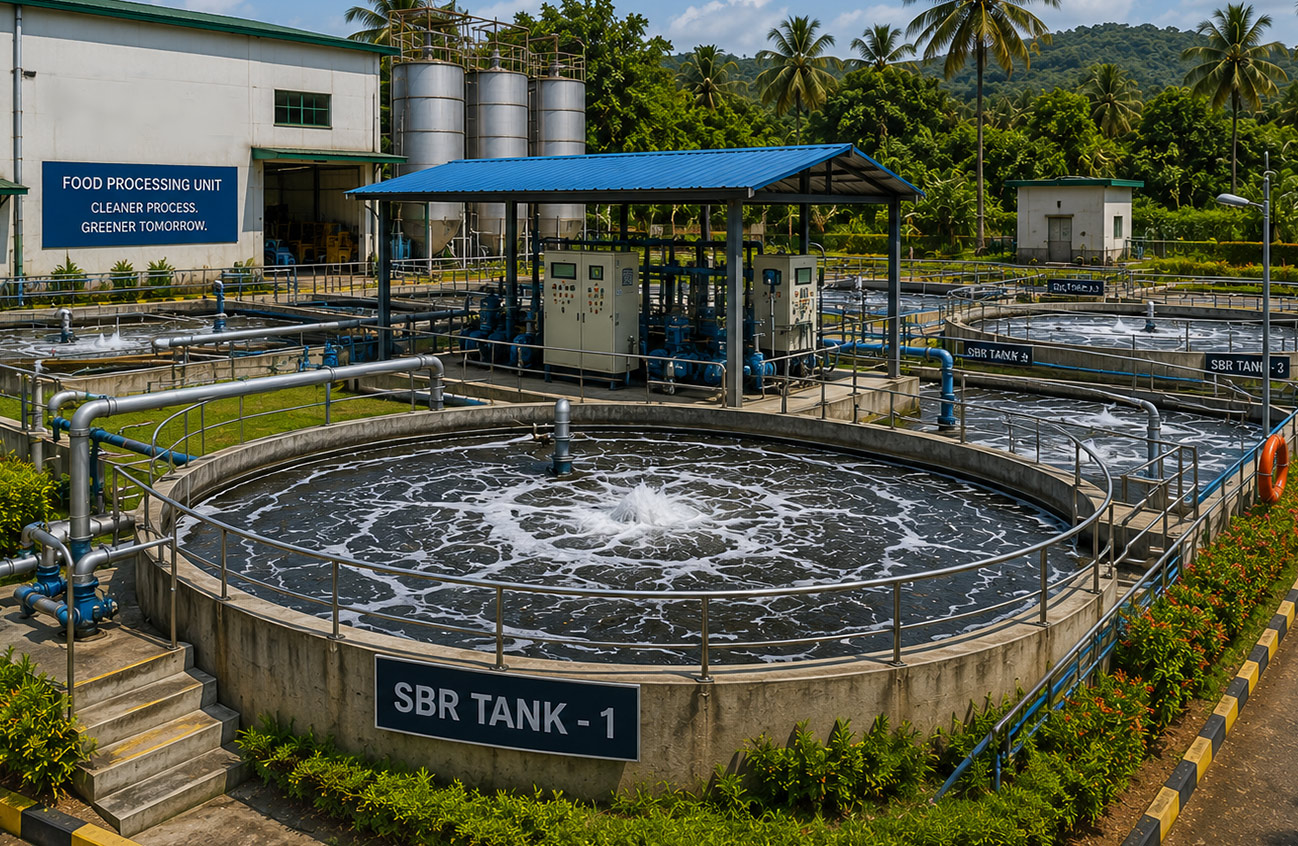
SBR Treatment Cycle
Carrier media is central to MBBR performance. Each carrier provides protected internal surface area where microorganisms can attach and develop into biofilm while remaining exposed to wastewater and dissolved oxygen.
An effective carrier-media system must consider:
- Protected Surface Area
- Long-Term Mechanical Stability
Hydroxy selects and sizes carrier media according to the biological load and treatment objective, ensuring that sufficient active surface area is available within the reactor.
Biological Treatment Controlled by Time
Unlike continuous-flow biological processes, SBR technology uses time-based process control to create different treatment environments within the same reactor.
Incoming wastewater is introduced according to the programmed batch sequence. The filling strategy can be coordinated with mixing and aeration according to the biological treatment requirement.
Aeration and mixing create the conditions required for microorganisms to metabolise biodegradable organic contaminants.
The aeration system supplies the oxygen required by the biomass while also maintaining suitable mixing conditions during the reaction phase.
Once biological treatment is complete, aeration stops and the reactor enters a quiet settling period. Biological solids settle within the same reactor rather than being continuously transferred to a separate settling process.
Clarified treated water is removed using a controlled decanter designed to withdraw water from the upper clarified zone while minimising disturbance of settled biomass.
Excess biological sludge is periodically removed to maintain the appropriate biological solids concentration and process stability.
After decanting and sludge management, the reactor automatically begins the next programmed batch cycle.
How It Works?!
Hydroxy follows a structured engineering approach to integrate biological treatment, hydraulics, aeration, settling and automation into one coordinated SBR system.
We evaluate wastewater flow, BOD, COD, suspended solids, pH, nutrient loading and other characteristics relevant to biological treatment.
Average flow, peak flow and actual pollutant loading are calculated to establish the treatment demand placed on the SBR.
Required working volume, batch volume and operating levels are determined according to hydraulic flow and biological treatment requirements.
Fill, react, settle, decant and idle periods are engineered to provide the required treatment while maintaining overall plant throughput.
Blower capacity, diffuser configuration and oxygen-transfer requirements are calculated around the biological oxygen demand of the process.
The treated-water withdrawal system is selected and positioned to remove clarified water reliably while minimising disturbance of settled sludge.
Sludge wasting frequency and operating conditions are established to maintain the required biological population and treatment stability.
Pumps, blowers, mixers, valves, decanters and level controls are coordinated through programmed operating sequences.
Hydroxy commissions the system progressively while establishing biomass and optimising the biological and hydraulic operating cycle.
Cycle times, dissolved oxygen, aeration, sludge concentration and decanting conditions are reviewed and adjusted according to actual plant performance.
SBR Treatment Cycle
Carrier media is central to MBBR performance. Each carrier provides protected internal surface area where microorganisms can attach and develop into biofilm while remaining exposed to wastewater and dissolved oxygen.
An effective carrier-media system must consider:
- Protected Surface Area
- Long-Term Mechanical Stability
- Media Geometry
- Media Density
- Fill Percentage
- Biofilm Accessibility
- Hydraulic Movement
- Oxygen Transfer
- Media Retention
Hydroxy selects and sizes carrier media according to the biological load and treatment objective, ensuring that sufficient active surface area is available within the reactor.
SBR Automation & Process Control - The Right Process at the Right Time
Automation is fundamental to reliable SBR operation because each treatment stage must happen in the correct sequence and for the appropriate duration.
Hydroxy can integrate PLC-based control of:
- Inlet Pumps
- Feed Valves
- Reactor Levels
- Mixers
- Aeration Blowers
- Air Control Valves
- Dissolved Oxygen
- Settling Periods
- Decanter Operation
- Sludge Wasting
- Chemical Dosing, where required
- Cycle Timing
- High / Low Level Conditions
- Equipment Faults
- Alarm Conditions
The control system coordinates the complete: Fill → React → Settle → Decant → Idle sequence with minimal routine operator intervention. This provides greater consistency between treatment cycles and gives operators clearer visibility into system status.
Aeration & Biological Control - Delivering the Oxygen the Biology Actually Needs
Aeration is one of the most important energy-consuming and process-critical components of an SBR. Too little oxygen can limit biological treatment.
Excessive aeration can waste energy without providing proportional improvement in treatment performance.
Hydroxy considers:
- Incoming Organic Load
- Oxygen Demand
- Reactor Depth
- Diffuser Arrangement
- Oxygen Transfer Efficiency
- Required Dissolved Oxygen
- Mixing Requirements
- Blower Turndown
- Aerated Cycle Duration
The objective is to provide the required biological oxygen transfer while avoiding unnecessary aeration energy.
SBR Decanting System - Removing Treated Water Without Disturbing the Biology
The decant stage is a defining part of the SBR process. After biological solids settle, treated water must be withdrawn from the clarified upper zone while avoiding excessive turbulence or solids carryover.
Hydroxy designs the decanting arrangement around:
- Required Decant Volume
- Reactor Water Levels
- Decant Flow Rate
- Settled Sludge Level
- Hydraulic Conditions
- Cycle Duration
- Required Treated-Water Quality
Depending on the system configuration, the decanter can be integrated with automated controls so that treated-water withdrawal occurs only after the programmed settling period is complete. Reliable decanting protects the separation achieved during the settle phase.
Flexible Biological Treatment - Different Conditions Within the Same Reactor
Because SBR operation is controlled by time rather than relying only on separate physical treatment zones, the biological environment inside the reactor can be varied during the treatment cycle.
Depending on the treatment objectives, controlled periods of:
- Aeration
- Mixing
- Non-Aerated Reaction
- Settling
- Decanting
can be incorporated into the operating sequence. This flexibility allows the biological treatment strategy to be adapted around the wastewater characteristics and required pollutant reduction.
SBR Retrofit & Process Optimisation - Existing SBR Not Performing as Expected?
SBR performance can decline when actual operating conditions move away from the assumptions used in the original design.
Typical challenges include:
- Increased Wastewater Flow
- Higher Organic Loading
- Poor Settling
- Solids Carryover During Decant
- Inconsistent Treated-Water Quality
- Excessive Aeration
- Incorrect Cycle Timing
- Blower Capacity Limitations
- Decanter Problems
- Excessive Sludge Accumulation
- High Energy Consumption
- Automation & Control Issues
Hydroxy can evaluate the existing reactor, biological conditions, equipment and operating cycle to identify the actual performance bottleneck.
SBR Optimisation May Include
- Cycle-Time Optimisation
- Aeration Optimisation
- Blower Upgradation
- Diffuser Improvements
- Decanter Upgradation
- Sludge-Control Improvements
- Capacity Enhancement
- Instrumentation Addition
- PLC & Automation Upgradation
- Treatment-Process Optimisation
Optimising an SBR often requires improving the operating sequence—not simply adding more equipment.
Why Hydroxy?
Successful SBR operation requires much more than building a reactor and installing blowers. The performance of the system depends on the correct relationship between: Wastewater Load + Biology + Oxygen + Settling + Decanting + Cycle Time
If any one of these elements is incorrectly designed or operated, the entire treatment cycle can be affected. Insufficient reaction time can limit biological treatment. Poor aeration can reduce biological activity. Inadequate settling can cause solids carryover. Incorrect decanting can disturb settled sludge. Poor cycle programming can reduce both treatment efficiency and plant capacity.
Hydroxy approaches SBR as a complete biological and process-control system, integrating:
- Wastewater Characterisation
- Biological Load Assessment
- Reactor Engineering
- Cycle Design
- Aeration Engineering
- Settling Control
- Decanter Engineering
- Sludge Management
- PLC Automation
- Commissioning
- Biological Process Optimisation
Our engineering approach begins with one essential question: "What treatment cycle does your wastewater actually require?"
Key Benifits
Biological treatment, settling and treated-water decanting occur sequentially within the same reactor, creating an integrated batch-treatment process.
Cycle timing, aeration and mixing can be programmed around wastewater characteristics and treatment objectives.
A properly engineered biological reaction phase provides microorganisms with the conditions required to reduce biodegradable organic pollutants..
Because wastewater inflow and aeration can be controlled during settling, the biomass receives a dedicated quiescent period for solid-liquid separation.
PLC-based automation can coordinate filling, aeration, settling, decanting and sludge management with reduced routine operator intervention.
Treatment-cycle parameters can be optimised as actual wastewater characteristics or operating requirements change.
Multiple biological-treatment functions can occur within the same reactor, reducing dependence on continuously operating separate process units.
Aeration operates according to the biological reaction cycle rather than necessarily running continuously, allowing the operating strategy to be optimised around actual oxygen demand.
Existing SBR systems can be evaluated for cycle optimisation, aeration improvements, automation upgrades, decanter improvements and capacity enhancement.