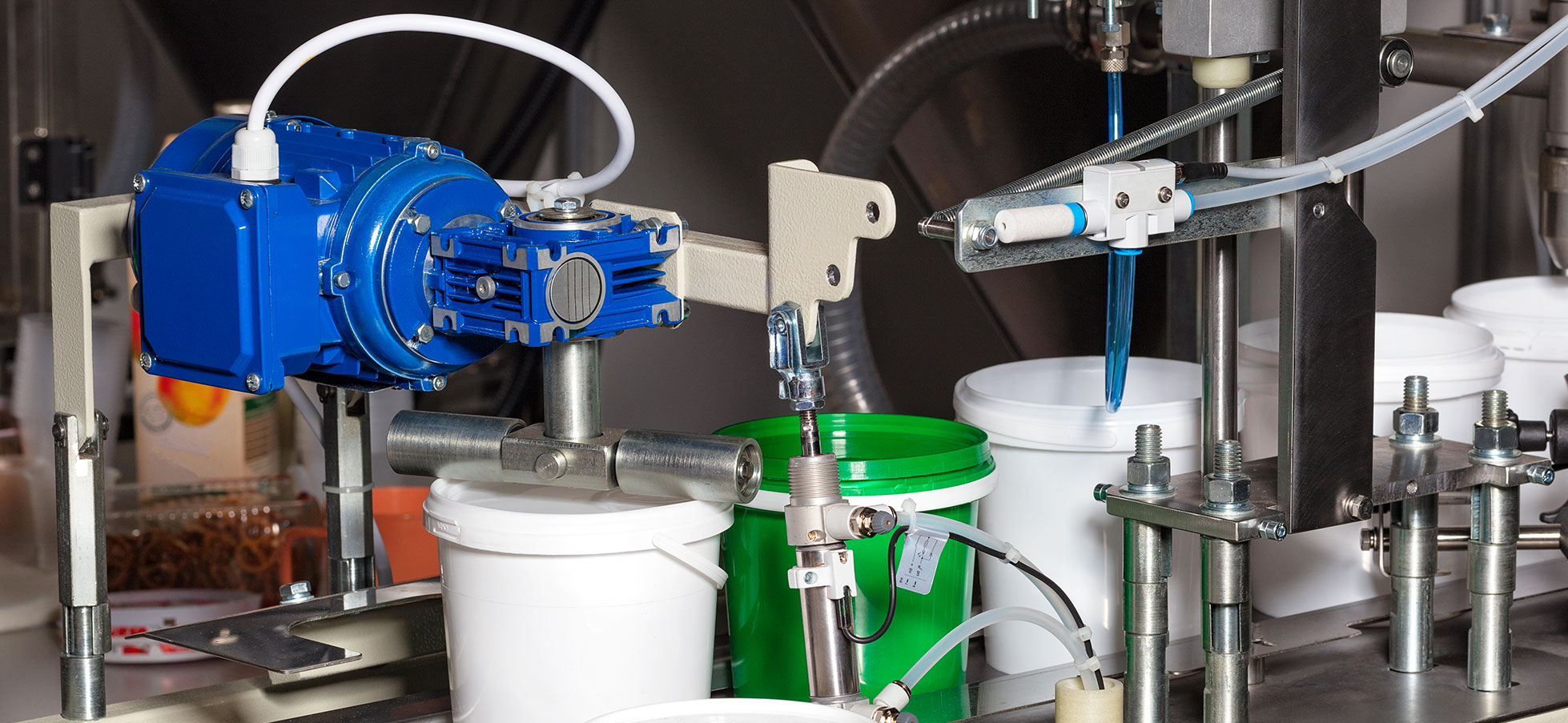
Chemical Dosing Systems
Hydroxy designs Chemical Dosing Systems for accurate and controlled addition of treatment chemicals—supporting consistent water quality, process stability and efficient chemical utilisation across water-treatment applications.
Chemical Dosing Systems
Chemical dosing is the controlled addition of a defined quantity of treatment chemical into a water stream to achieve a specific process objective.
Applications can include pH correction, disinfection, coagulation, flocculation, oxidation and scale-control dosing, depending on the water-treatment requirement.
Hydroxy Water Technologies designs dosing systems around the chemical characteristics, required dosage, process flow, operating pressure and control requirements rather than treating the dosing pump as a standalone component. The objective is simple: Deliver the right chemical, at the right dose, at the right point in the process.

Chemical Dosing Principle
A Chemical Dosing System works by preparing or storing a treatment chemical and delivering a controlled quantity into the water stream.
The treatment chemical is stored or prepared in a suitably selected dosing tank.
A dosing pump delivers the chemical at a controlled flow rate according to the required dosage.
The chemical is introduced into the water stream through an appropriate injection point.
The dosed chemical disperses through the water and performs its intended treatment function.
Dosing can operate at a fixed rate or be automatically adjusted according to process flow or suitable water-quality signals. Chemical Storage → Metering → Injection → Mixing → Process Control
Engineered Around Your Dosing Requirement - Accurate Dosing Begins With Correct System Selection
A dosing system should not be selected only by pump capacity. Hydroxy considers important parameters such as:
- Chemical Type
- Chemical Concentration
- Required Dosage
- Water Flow Rate
- Required Dosing Rate
- Operating Pressure
- Chemical Compatibility
- Dosing Frequency
- Required Control Method
- Tank Capacity
- Mixing Requirement
- Duty / Standby Requirement
- Automation & Monitoring Requirement
Reliability, safety, system integration and duty/standby requirements are recognised design considerations when developing chemical dosing systems. The objective is accurate chemical delivery without unnecessary over-dosing or under-dosing.
Typical Chemical Dosing Applications
Controlled acid or alkali dosing to adjust water to the required pH range.
Controlled dosing of appropriate disinfectant chemicals according to the treatment requirement.
Accurate addition of coagulants to support destabilisation and removal of fine suspended or colloidal contaminants.
Controlled polymer dosing to assist floc formation and subsequent solids separation.
Controlled antiscalant addition where scale-control treatment is required.
Chemical dosing can also be configured for selected oxidation requirements depending on water chemistry and treatment objectives.
Typical System Configuration
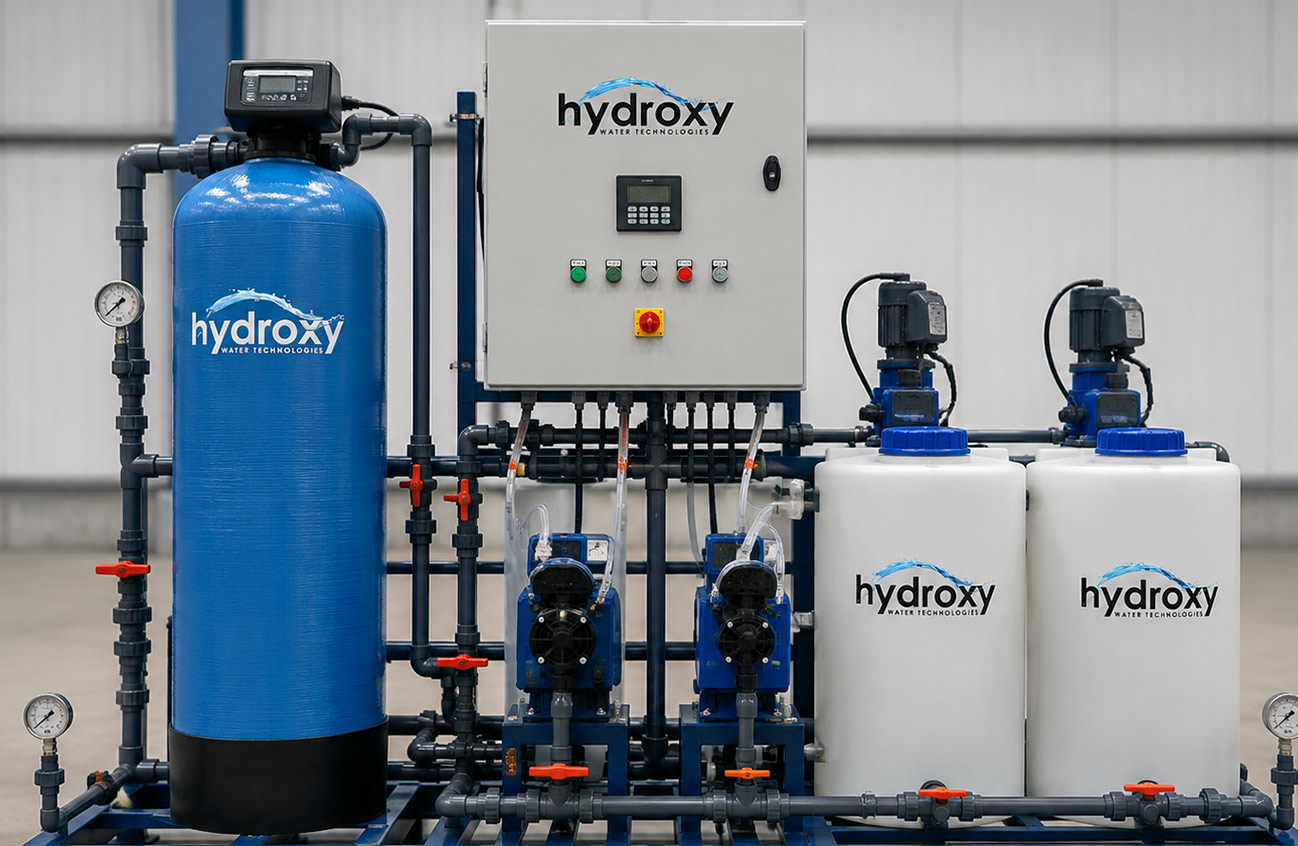
Depending on the application, a Hydroxy Chemical Dosing System may incorporate:
- Chemical Storage / Preparation Tank
- Dosing / Metering Pump
- Agitator or Mixer, where required
- Suction Assemblyv
- Injection Valve
- Pressure Relief / Back-Pressure Componentsv
- Chemical-Resistant Piping & Tubing
- Level Monitoring
- Flow Monitoring
- Control Panel
- PLC / Automatic Controls
- Duty / Standby Pump Arrangement
Dosing tank stations and dosing skids are commonly configured as integrated packages for storing and precisely dosing treatment chemicals.
How It Works - From Treatment Requirement to Controlled Chemical Dosing
Hydroxy evaluates the water flow, treatment objective and chemical requirement.
The required chemical dosing rate is determined according to concentration, process flow and treatment objective.
Pump capacity, storage volume, wetted materials and accessories are selected around the chemical and operating conditions.
The dosing pump delivers the required chemical quantity into the treatment process.
Dosing can be coordinated with process flow or suitable instrumentation to improve operating consistency.
The system is commissioned and dosing parameters are adjusted according to actual operating conditions.
Manual & Automatic Dosing - Control Matched to Your Process
Suitable where process conditions and chemical requirements remain relatively stable.
Chemical feed can vary with changes in water flow to maintain a more consistent dosing ratio.
Where suitable instrumentation is available, dosing can be integrated with process measurements and control logic for more responsive operation. Modern dosing solutions can dynamically adjust chemical flow as system demand changes and can be integrated with monitoring and process-control systems.
Why Hydroxy? - Precise Dosing Is About the Complete System
A high-quality dosing pump alone does not guarantee good chemical treatment. Reliable dosing depends on the relationship between: Chemical + Concentration + Pump Selection + Flow + Injection + Mixing + Control
Incorrect dosing can waste chemicals, reduce treatment effectiveness or create unstable operating conditions.
Hydroxy designs the complete dosing arrangement around the actual treatment process, with consideration for accuracy, chemical compatibility, operating reliability, automation and maintainability.
Our approach begins with one question: "How much chemical does your process actually need—and how should it be controlled?"
Key Benifits
Controlled metering helps deliver the required quantity of treatment chemical according to process demand.
Reliable dosing supports more stable chemical-treatment conditions.
Correct system sizing and control help minimise unnecessary over-dosing.
Dosing pumps and instrumentation can be integrated with automated controls according to application requirements.
System materials and wetted components are selected according to the chemical being handled and operating conditions.
Removing iron before downstream treatment can help reduce fouling and contamination of other water-treatment equipment.
Hydroxy selects the oxidation process, filtration media, vessel size and backwash configuration according to the actual iron concentration and operating requirements.