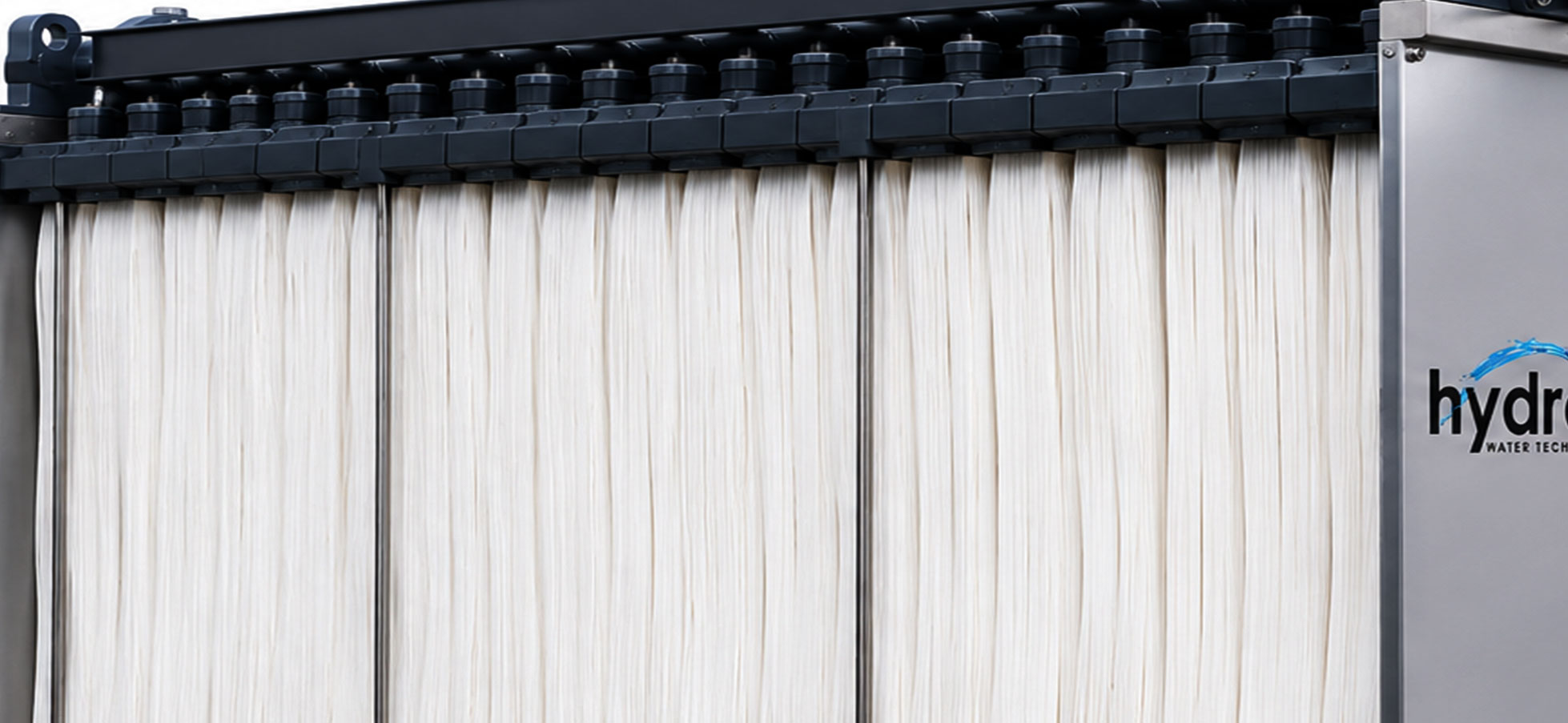
Membrane Bioreactors (MBR)
Hydroxy designs and integrates Membrane Bioreactor systems that combine biological wastewater treatment with membrane-based solid-liquid separation—delivering compact treatment, consistently clarified effluent and greater potential for treated-water reuse.
Membrane Bioreactors (MBR)
Membrane Bioreactor technology integrates biological wastewater treatment with membrane filtration in a single treatment process.
Microorganisms within the biological reactor break down biodegradable organic contaminants, while fine membrane barriers physically separate treated water from suspended biomass and solids.
Unlike conventional treatment processes that depend heavily on gravity settling for biological solids separation, MBR uses membranes to create a controlled physical barrier between the biological mixed liquor and the treated-water stream.
This allows the biological process and solid-liquid separation process to work together within a compact treatment configuration.
Hydroxy Water Technologies designs site-specific MBR systems around wastewater characteristics, organic loading, hydraulic flow, membrane performance, treated-water requirements and intended reuse applications.
The result is a highly integrated treatment process engineered for consistent effluent quality, compact footprint, automated operation and dependable long-term membrane performance.

Submerged MBR Systems - Biological Treatment and Membrane Separation in One Integrated Process
In submerged MBR configurations, membrane modules operate directly within the biological mixed liquor or within a dedicated membrane tank connected to the biological process.
Treated water is drawn through the membrane while suspended biomass remains within the biological system.
Hydroxy integrates membrane modules, biological reactors, aeration, permeate extraction, backwashing, cleaning and process controls as one coordinated system.
Suitable For
- New MBR Installations
- Compact Treatment Facilities
- High-Quality Effluent Requirements
- Treated-Water Reuse Projects
- Space-Constrained Sites
- Capacity Expansion Projects
Packaged MBR Plants - Compact Treatment With Advanced Membrane Performance
Where installation space, construction time or modularity is important, Hydroxy can develop packaged MBR systems integrating the key biological and membrane-treatment components into a compact plant configuration.
Packaged systems can simplify site integration while maintaining the core advantages of membrane-based solids separation.
Suitable For
- Compact Treatment Installations
- Decentralised Treatment
- Modular Capacity Requirements
- Commercial Facilities
- Institutional Facilities
- Water Reuse Applications
Engineered Around Biological Load & Membrane Performance. MBR Performance Depends on More Than Membrane Area
A successful MBR system must maintain the correct relationship between biological treatment, hydraulic loading and membrane filtration.
Selecting membrane capacity without understanding the biological process can lead to excessive fouling, unstable operation, reduced permeate production or increased cleaning requirements.
Hydroxy evaluates key design and operating parameters such as:
- Average & Peak Wastewater Flow
- BOD — Biochemical Oxygen Demand
- COD — Chemical Oxygen Demand
- Total Suspended Solids — TSS
- pH and Organic Loading
- Nutrient Loading
- MLSS — Mixed Liquor Suspended Solids
- SRT — Solids Retention Time
- Hydraulic Retention Time
- Membrane Flux
- Transmembrane Pressure
- Aeration Requirement
- Membrane Cleaning Strategy
- Required Permeate Quality
- Treated-Water Reuse Objective
Based on these conditions, an MBR system may incorporate:
- Fine Screening
- Equalisation
- Biological Reactor
- Anoxic / Aerobic Treatment Zones, where required
- MBR Membrane Tank
- Hollow-Fibre or Other Appropriate Membrane Modules
- Process Aeration
- Membrane Air Scouring
- Permeate Extraction Pumps
- Backwash System
- Chemical Cleaning System
- Sludge Recirculation
- Excess Sludge Management
- Flow & Pressure Instrumentation
- Transmembrane Pressure Monitoring
- PLC-Based Automation
- Treated-Water Storage
- Final Disinfection, where required
*The result is an MBR system engineered as one biological and membrane process—not simply a biological tank with membranes added to it.
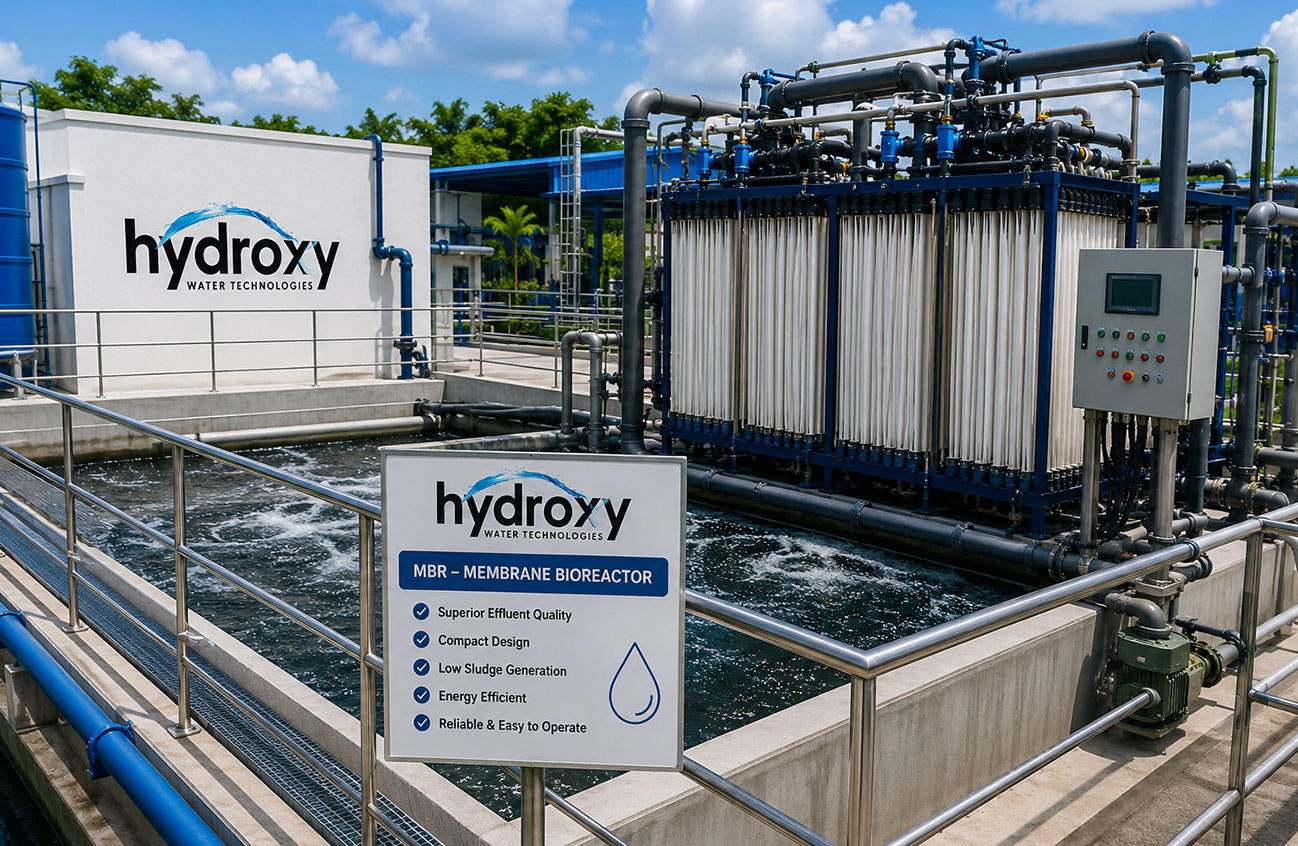
The MBR Treatment Process
MBR performance comes from the close integration of two treatment mechanisms.
Wastewater enters the biological reactor where microorganisms metabolise biodegradable organic matter under controlled aerobic and, where required, anoxic conditions.
Maintaining appropriate biomass concentration, oxygen transfer and retention time is critical to stable biological performance.
The membrane barrier retains suspended biomass within the treatment process rather than relying primarily on gravity settling for separation.
This allows the biological process to operate with controlled solids retention.
Mixed liquor is brought into contact with the membrane modules.
Water passes through the membrane as treated permeate, while suspended solids and biomass remain within the biological system.
Air is introduced around the membrane modules to create movement along the membrane surface and help control solids accumulation.
Filtered water is withdrawn through the membranes using the appropriate permeate extraction arrangement.
At programmed intervals, treated permeate may be used to reverse flow through the membranes and help remove material accumulated on the membrane surface.
Periodic maintenance or recovery cleaning is incorporated according to membrane condition, operating performance and manufacturer requirements.
A controlled quantity of excess biomass is removed from the biological process to maintain the required solids concentration and sludge age.
How It Works?!
Hydroxy follows a structured engineering process to ensure that biological treatment and membrane filtration operate as one coordinated system.
We evaluate wastewater flow, contaminant loading, operating pattern and required treated-water quality.
Biological reactor volume, aeration requirements, biomass concentration and retention conditions are engineered around the organic and hydraulic load.
Membrane area and operating flux are determined according to wastewater characteristics, required permeate production and system operating strategy.
Appropriate screening and upstream treatment help prevent fibres, debris and unsuitable solids from reaching and damaging the membrane modules.
Microorganisms break down biodegradable pollutants within the controlled biological reactor environment.
Membranes retain biomass and suspended solids while treated water passes through as permeate.
Air scouring, backwashing and appropriate chemical cleaning strategies are incorporated to manage membrane fouling and maintain filtration performance.
Flows, levels, aeration, permeate production, pressure and membrane cleaning sequences can be integrated into an automated control system.
Hydroxy integrates, tests and commissions the complete MBR process while biological and membrane operating parameters are progressively stabilised.
Ongoing support includes membrane performance monitoring, preventive maintenance, cleaning optimisation, equipment servicing and membrane replacement planning.
Membrane Performance & Fouling Control - Protecting the Membrane Is Central to MBR Performance
Membrane fouling is one of the most important operational considerations in an MBR system. Solids, biological material and other wastewater constituents can accumulate on membrane surfaces and increase resistance to permeate flow.
For this reason, Hydroxy approaches membrane management as part of the original system design.
An effective membrane-management strategy can include:
- Correct Fine Screening
- Controlled Membrane Flux
- Appropriate MLSS Management
- Continuous / Cyclic Air Scouring
- Permeate Backwashing
- Relaxation Cycles
- Transmembrane Pressure Monitoring
- Maintenance Cleaning
- Recovery Cleaning
- Membrane Integrity Monitoring
- Preventive Maintenance
Reliable MBR operation depends not only on selecting the right membrane, but on creating the right operating environment around it.
MBR Retrofit & Upgradation - Upgrade Existing Treatment Capacity With Membrane Separation
Where an existing treatment system faces limitations in footprint, solids separation or treated-water quality, MBR technology can be evaluated as part of an upgrade or retrofit strategy. Hydroxy can assess existing infrastructure to determine opportunities for incorporating membrane-based treatment.
Typical Upgrade:
- Improve Treated-Water Quality
- Increase Treatment Capacity
- Improve Solids Separation
- Reduce Dependence on Clarification
- Enable Higher-Quality Water Reuse
- Improve Process Automation
- Upgrade Ageing Membrane Equipment
- Improve Membrane Cleaning Systems
The appropriate retrofit strategy depends on existing tank volumes, biological loading, hydraulic conditions, equipment condition and treatment objectives.
Treated-Water Reuse - High-Quality Effluent for Further Reuse
One of the important advantages of MBR technology is the consistently low suspended-solids content of the membrane-filtered effluent. This makes MBR particularly suitable where treated water will undergo reuse, disinfection or additional advanced treatment.
Depending on required water quality and applicable requirements, MBR permeate can form part of a reuse system for applications such as:
An ETP that performed effectively when originally installed may struggle when:
- Landscape Irrigation
- Toilet Flushing
- Utility Water
- Floor & External Area Washing
- Cooling-Tower Make-Up, with appropriate additional treatment
- Feed to Advanced Membrane Treatment
- Other Suitable Non-Potable Reuse Applications
Where required, Hydroxy can integrate additional disinfection, polishing or advanced membrane treatment downstream of the MBR process.
Final reuse suitability depends on treated-water quality, intended application and applicable regulatory requirements.
Why Hydroxy?
MBR Is a Biological Process and a Membrane Process
Successful MBR operation requires both systems to perform together. Installing high-quality membrane modules cannot compensate for an unstable biological process. Likewise, good biological treatment alone cannot guarantee reliable membrane performance if flux, aeration, screening and cleaning are poorly managed.
Hydroxy approaches MBR as an integrated engineering system combining:
- Wastewater Characterisation
- Biological Process Engineering
- Membrane Selection & Sizing
- Aeration Engineering
- Membrane Fouling Control
- Instrumentation & Automation
- Site Integration
- Commissioning
- Membrane Lifecycle Support
This integrated approach helps ensure that the biological reactor provides the right environment for treatment while the membrane system delivers consistent solid-liquid separation
Our approach begins with one essential question: "How do we keep the biology and membrane performing together?
Key Benifits
Treated-water separation is achieved through the membrane barrier rather than depending primarily on the settling characteristics of biological sludge.
Membrane retention enables the biological process to maintain higher biomass concentrations and greater control over solids retention compared with many conventional configurations.
Consistently clarified MBR permeate provides a strong foundation for treated-water reuse, disinfection or additional advanced treatment where required.
Permeate extraction, air scouring, backwashing, cleaning cycles and critical operating parameters can be integrated into PLC-based automated controls.
MBR technology can be evaluated for existing treatment facilities where improved effluent quality, increased treatment capacity or reduced footprint is required.
Hydroxy supports ongoing performance through membrane cleaning optimisation, operating-condition monitoring, preventive maintenance, troubleshooting and membrane replacement planning.