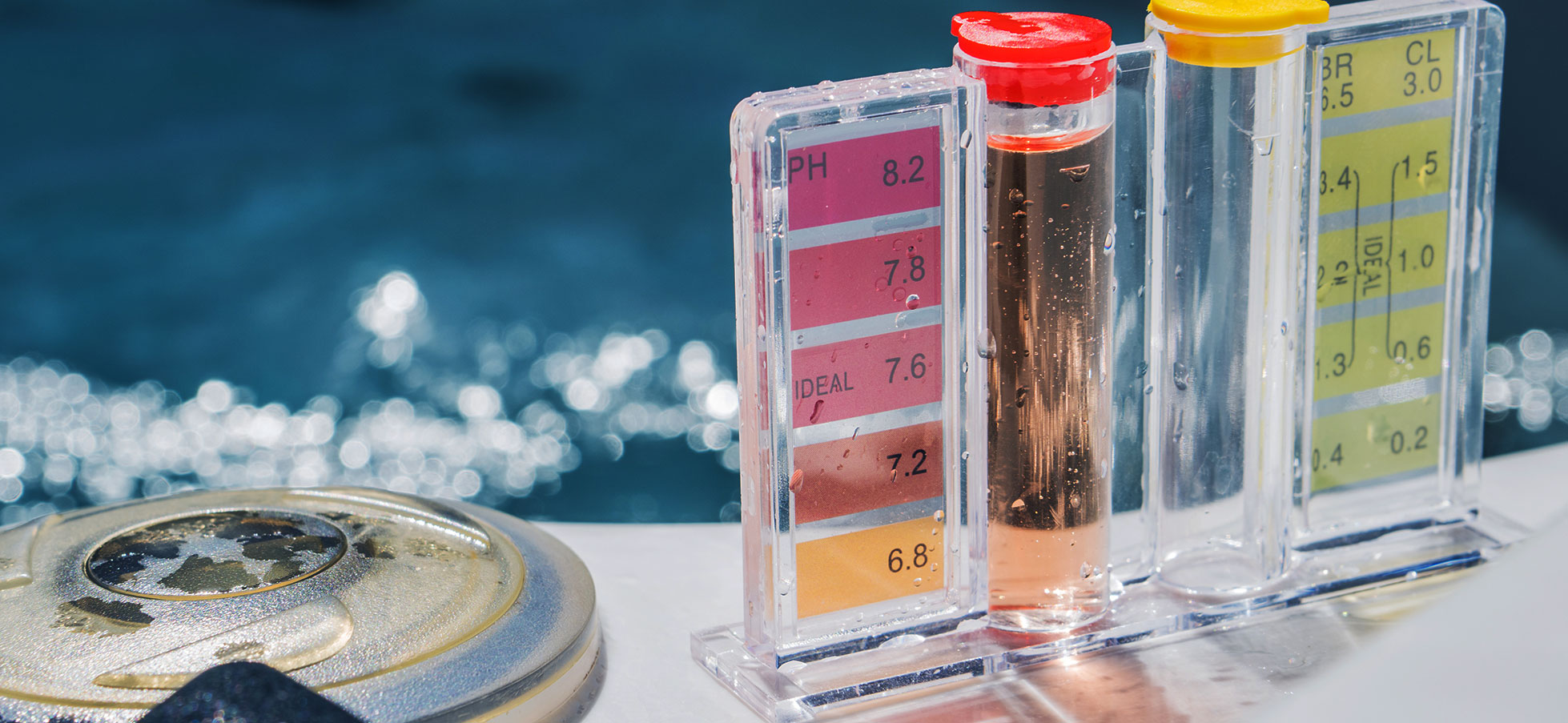
Chlorination Systems
Controlled chemical disinfection for reliable water protection. Hydroxy designs Chlorination Systems for accurate and controlled dosing of chlorine-based disinfectants—providing effective microbial control, residual protection and dependable operation across water-treatment applications.
Chlorination Systems
Chlorination is a widely used water-disinfection process in which a controlled quantity of chlorine-based disinfectant is introduced into water to inactivate microorganisms and maintain a protective disinfectant residual.
The required chlorine dosage depends on the quality of the incoming water and the amount of chlorine consumed by substances present before an effective residual is established.
Hydroxy Water Technologies designs Chlorination Systems according to water characteristics, chlorine demand, flow capacity, required dose, contact time and residual chlorine requirement.
The objective is to deliver the correct disinfectant dose consistently—without unnecessary over-dosing or inadequate treatment.

Chlorination Principle
Chlorination works by introducing a controlled amount of chlorine-based disinfectant into the water and providing sufficient time for the disinfectant to react.
The disinfectant solution is stored or prepared in a suitable chemical tank.
A metering pump introduces the required quantity of disinfectant into the water stream.
The chemical is adequately dispersed through the water.
Water is retained for sufficient time to allow the disinfectant to react with susceptible microorganisms and other chlorine-demanding substances.
A controlled chlorine residual can remain in the treated water to provide continued protection through storage and distribution.Chemical Storage → Metering → Injection → Mixing → Contact → Disinfected Water
Engineered Around Chlorine Demand - The Right Dose Depends on the Water
Chlorination should not be based only on water flow. Some of the added chlorine may be consumed by organic matter, iron, manganese, ammonia and other reactive substances before an effective disinfectant residual is achieved. Hydroxy evaluates important parameters such as:
- Water Flow Rate
- Chlorine Demandv
- Required Chlorine Dose
- Target Residual Chlorine
- Contact Time
- pH, Turbidity
- Organic Loading
- Iron & Manganese, where relevant
- Ammonia, where relevant
- Storage / Contact-Tank Volume
- Operating Hours
- Required Disinfection Objective
These parameters determine the appropriate chemical concentration, dosing-pump capacity, contact arrangement and control method. Effective chlorination is about achieving the required residual after chlorine demand has been satisfied.
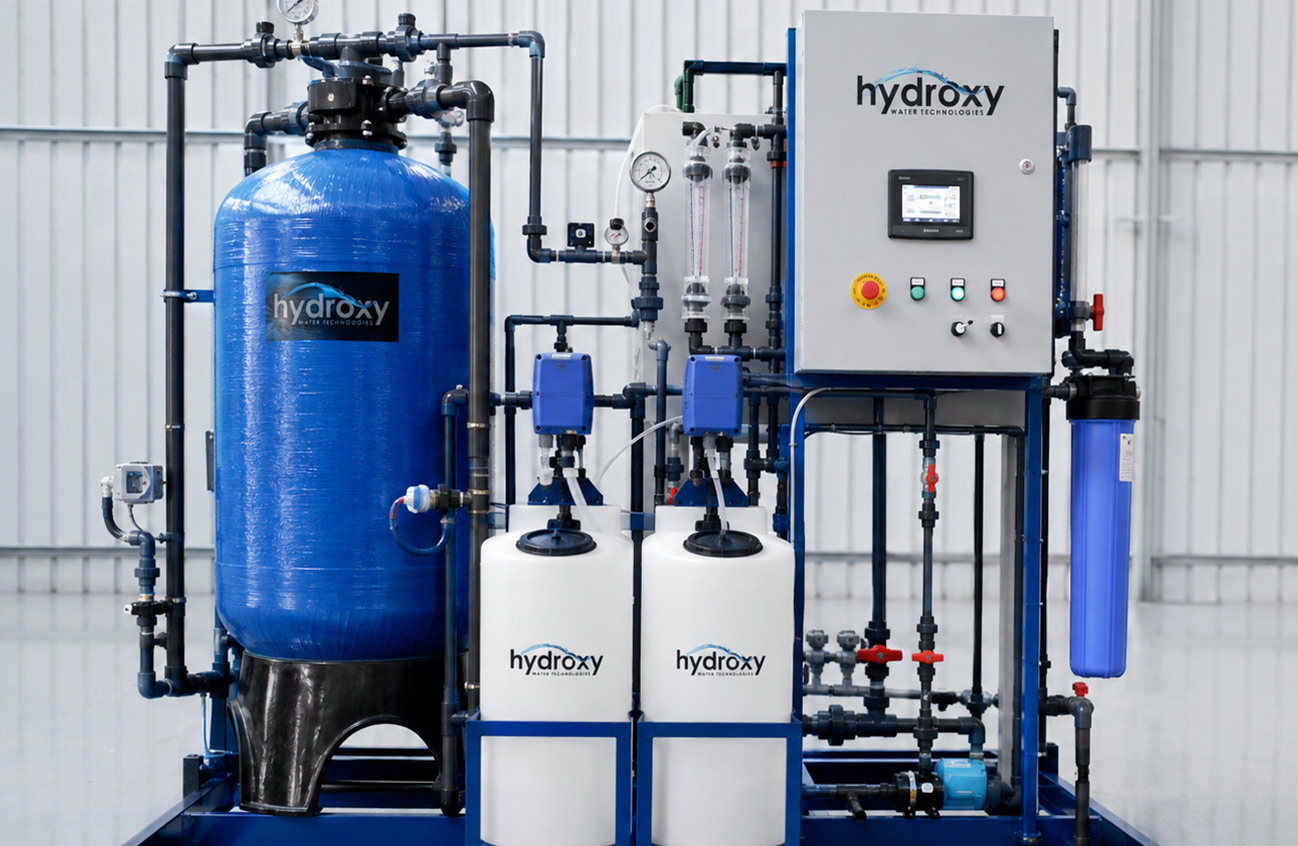
Typical Chlorination System Components
Depending on the application, a Hydroxy Chlorination System may incorporate:
- Chemical Storage Tank
- Sodium Hypochlorite Dosing Tank
- Metering / Dosing Pump
- Agitator, where required
- Suction Assembly
- Injection Valve
- Chemical-Resistant Tubing & Piping
- Contact Tank
- Flow Meter
- Residual Chlorine Monitoring
- Tank-Level Sensor
- Control Panel
- PLC / Automatic Controls
- Duty / Standby Dosing Pumps
The final configuration is selected according to flow, dosage requirement and level of automation.
How It Works - From Water to Chlorinated Water
Hydroxy evaluates incoming water quality, required flow and disinfection objective.
The required dosage is determined according to chlorine demand and target residual.
The dosing pump introduces a controlled quantity of disinfectant into the water stream.
The chemical is dispersed effectively through the water.
Water is provided with the required contact time to allow disinfection to occur.
Residual chlorine can be monitored to verify that sufficient disinfectant remains after treatment.
Dosing can be adjusted according to actual operating conditions and water-quality requirements.
Chlorine Dose & Contact Time - Effective Disinfection Requires Both
Increasing chlorine concentration alone does not guarantee reliable disinfection. Performance depends on the relationship between:Chlorine Concentration + Contact Time + Water Quality
Adequate contact allows the disinfectant to react with microorganisms while residual monitoring helps confirm that sufficient chlorine remains after the water's chlorine demand has been satisfied.
Hydroxy therefore considers the complete dose-and-contact relationship when designing the system.
Manual & Automatic Chlorination - Control Matched to Your Application
Maintaining the correct chlorine residual is an important operating parameter. Too little residual may indicate insufficient dosage or high chlorine demand.
Excessive residual may result in unnecessary chemical consumption and undesirable water characteristics. Hydroxy systems can incorporate:
- Online Residual Chlorine Monitoring
- Manual Sampling Points
- Flow Monitoring
- Dosing-Pump Control
- High / Low Residual Alarms
- Automatic Dose Adjustment
- Data & Operating Status Display
The objective is to maintain controlled and measurable chlorination performance.
Typical Applications
Hydroxy Chlorination Systems can be used for:
- Drinking Water Disinfection
- Borewell Water Disinfection
- Commercial Water Systems
- Hotels & Resorts
- Hospitals & Institutions
- Industrial Utility Water
- Water Storage Tanks
- Distribution Systems
- Process Water
- Treated-Water Disinfection
Chemical Handling & Safety
Chlorination involves reactive chemicals that must be stored, handled and dosed correctly. Hydroxy considers:
- Chemical-Compatible Materials
- Secure Chemical Storage
- Controlled Chemical Transfer
- Bund / Spill Containment, where required
- Tank-Level Monitoring
- Ventilation Requirements
- Appropriate Injection Components
- Pump Interlocks
- Safe Maintenance Access
- Operator Safety Procedures
Safe chemical management is treated as part of the complete system design.
Why Hydroxy? - Chlorination Is More Than Adding Chlorine to Water
Reliable chlorination depends on the relationship between: Water Quality + Chlorine Demand + Dose + Mixing + Contact Time + Residual. A correctly sized dosing pump alone cannot guarantee effective disinfection.
Poor mixing, inadequate contact time or failure to account for chlorine demand can result in inconsistent treatment.
Hydroxy designs the complete Chlorination System around actual water characteristics and operating conditions to provide controlled chemical dosing, measurable residual and dependable disinfection performance.
Our approach begins with one essential question: "What chlorine dose and contact time does your water actually require?"
Key Benifits
Correctly applied chlorination provides reliable disinfection against susceptible microorganisms.
Unlike treatments that act only at the point of treatment, chlorine can maintain a disinfectant residual within storage and distribution systems.
Metering pumps provide accurate and repeatable addition of disinfectant according to the treatment requirement.
Chlorination can be configured for fixed-rate, flow-proportional or residual-controlled dosing.
Systems can be engineered for small, commercial or high-flow water-treatment applications.
Residual chlorine provides a measurable operating parameter for monitoring treatment performance.
Its primary purpose is microbial control and residual disinfection. It is not intended as the primary treatment for removing: Hardness, TDS, Suspended Solids and Sediment
Effective chlorination depends on the quality of the incoming water and the correct relationship between dose, contact time and residual chlorine.