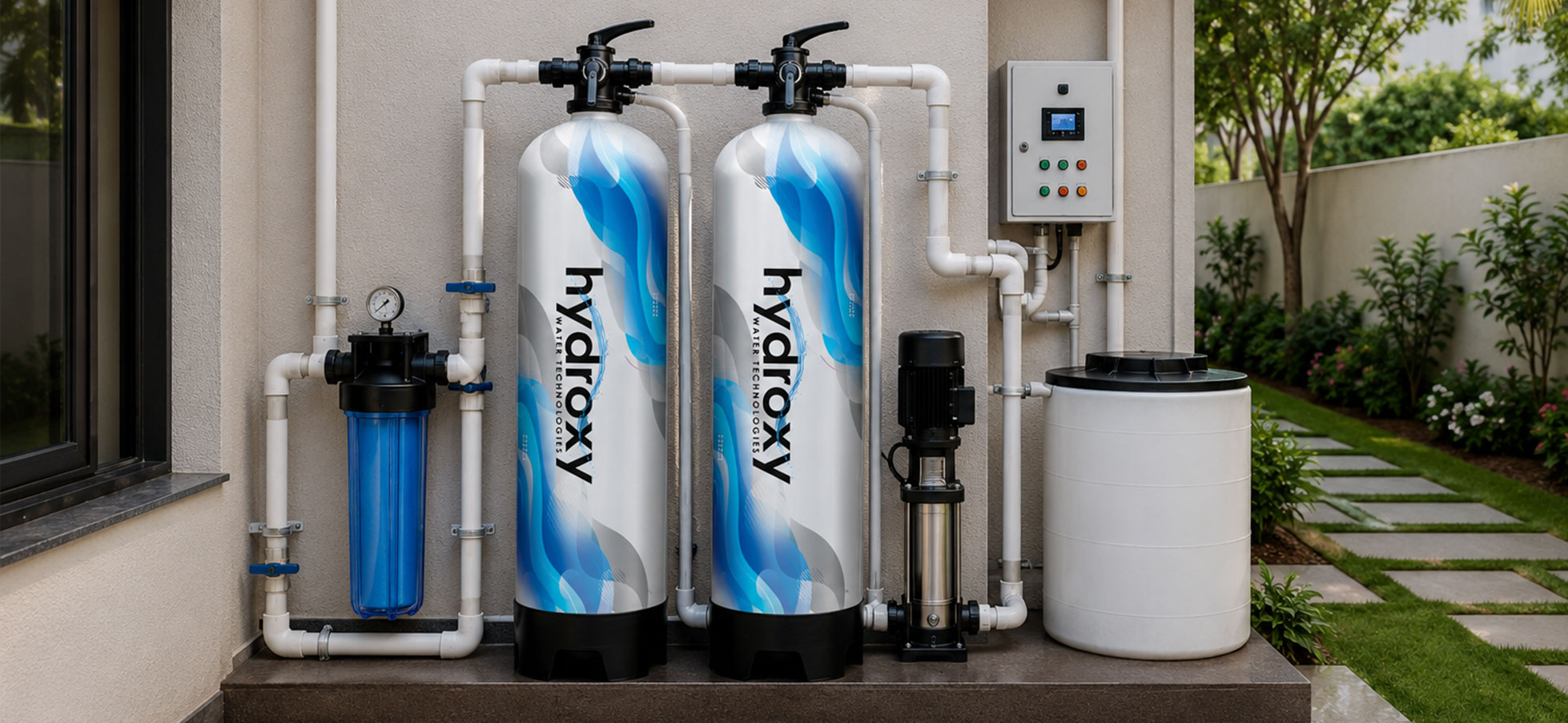
Water Softening Systems
Hydroxy designs water softening systems to reduce calcium and magnesium hardness helping prevent scale buildup, protect plumbing and equipment, and improve water quality for residential, commercial and industrial applications.
Water Softening Systems
Hard water contains elevated levels of calcium and magnesium minerals that can create scale deposits inside pipelines, water heaters, boilers, heat exchangers, dry and brittle hair, flaky scalp, skin irritation, and flare-ups of eczema or acne, RO membranes and other water-using equipment.
Over time, scale buildup can restrict water flow, reduce heat-transfer efficiency, increase cleaning and maintenance requirements, and shorten the operating life of downstream equipment.
Hydroxy Water Technologies designs water softening systems based on incoming water hardness, required flow rate, daily consumption, operating conditions and application.
Using proven ion-exchange technology and appropriately selected resin, Hydroxy systems reduce hardness and deliver softened water for residential, commercial, institutional and industrial requirements.

Softer Water for Everyday Living
Hard water can leave scale deposits on taps, bathroom fittings, shower screens, water heaters and household appliances. It can also increase soap consumption and make routine cleaning more difficult.
Hydroxy residential water softeners are designed around your incoming water hardness and household consumption to provide dependable softened water throughout the property.
- Homes & Villas
- Apartments
- Residential Communities
- Borewell Water
- Bathroom & Plumbing Protection
- Water Heater & Appliance Protection
Reliable Soft Water for High-Demand Operations
Hotels, hospitals, apartments, laundries, restaurants and commercial facilities can consume large quantities of water every day. Hardness-related scale can significantly affect plumbing systems and water-using equipment.
Hydroxy engineers commercial water softening systems according to water hardness, peak flow demand, daily consumption and regeneration requirements, providing dependable softened water for continuous operations.
- Hotels & Resorts
- Hospitals & Healthcare Facilities
- Laundries
- Apartments & Residential Communities
- Restaurants & Hospitality Facilities
- Commercial & Institutional Buildings
Engineered Around Your Water Hardness
The system must be correctly sized according to incoming hardness, required flow rate, daily water consumption, operating hours and regeneration frequency to achieve dependable performance.
Hydroxy evaluates important parameters such as:
- Total Hardness
- Calcium, Magnesium Hardness
- Iron, TDS, pH
- Daily Water Consumptionr
- Peak Flow Rate
- Required Soft-Water Quality
- Operating & Regeneration Requirements
Based on these conditions, the system may incorporate:
- Pre-Filtration
- Ion-Exchange Resin Vessel
- Automatic Multiport / Control Valve
- Brine Tank
- Automatic Regeneration
- Hardness Monitoring
- Single-Vessel Configuration
- Duplex / Duty-Standby Configuration
*The result is a water softening system engineered around your actual hardness load and water demand rather than a standard equipment size.
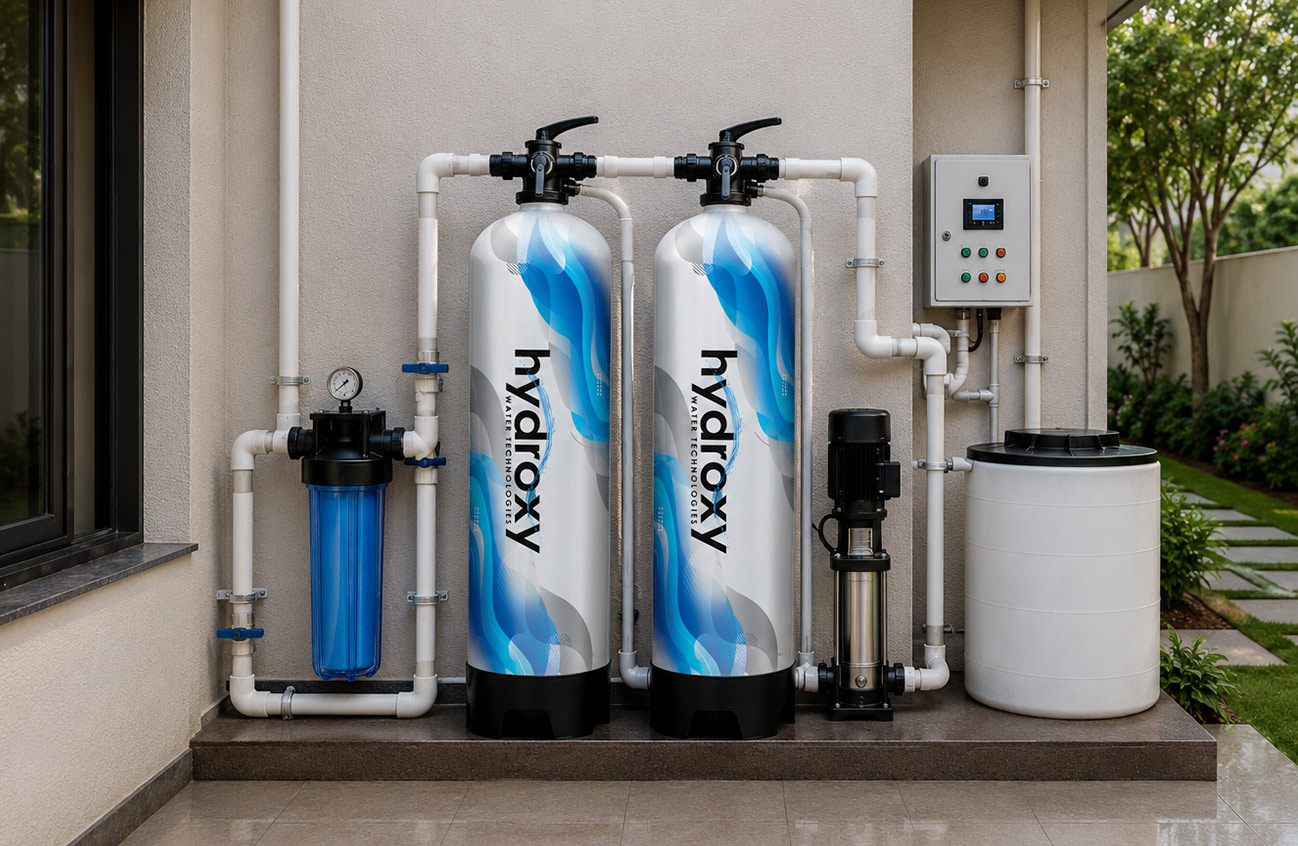
How It Works?!
From Hard Water to Reliable Soft Water. Hydroxy water softeners use ion-exchange technology to reduce the calcium and magnesium ions responsible for water hardness.
We analyse incoming hardness and other relevant water-quality parameters to understand the treatment requirement.
Daily water consumption, peak flow rate, operating hours and application requirements are evaluated to correctly size the system.
Hard water passes through a vessel containing ion-exchange resin. The resin exchanges hardness-causing calcium and magnesium ions for sodium ions, producing softened water.
As the resin reaches its treatment capacity, the system automatically initiates regeneration using a controlled brine solution to restore the resin's softening capacity.
After regeneration, the resin is rinsed and the softener automatically returns to normal operation.
Hydroxy supports continued system performance through periodic servicing, hardness checks, resin assessment, salt management and preventive maintenance.
Why Hydroxy?
An effective water softening system requires more than simply installing a standard softener.
If the unit is undersized, regeneration may occur too frequently and softened-water quality can become inconsistent. If oversized or incorrectly configured, the system may consume unnecessary water, salt and operating resources.
Hydroxy designs each system around the actual hardness concentration, flow demand, daily consumption and operating profile of the application.
Our approach combines water analysis, correct equipment sizing, quality ion-exchange media, automation, professional installation and responsive lifecycle support to deliver dependable long-term softening performance.
Whether the requirement is for a home, apartment, hotel, hospital, laundry, commercial facility or industrial plant, we begin with one important question: "How much hardness does your system actually need to remove?"
Key Benifits
Ion-exchange treatment reduces calcium and magnesium hardness, providing softened water suited to residential, commercial and industrial applications.
Reducing hardness helps minimise scale formation inside pipelines, taps, water heaters, boilers, heat exchangers and other water-using equipment.
Softened water can help reduce scaling and mineral deposits in RO membranes, heating systems, plumbing networks and process equipment, supporting more reliable operation.
Controlling hardness can help reduce scale-related maintenance, cleaning requirements and performance losses in water-using systems.
Hydroxy softeners can be configured with automatic control valves to manage service, backwash, regeneration and rinsing cycles with minimal operator intervention.
Hydroxy selects the softener capacity according to your water hardness, peak flow rate, daily consumption and operating requirements rather than applying a standard system configuration.