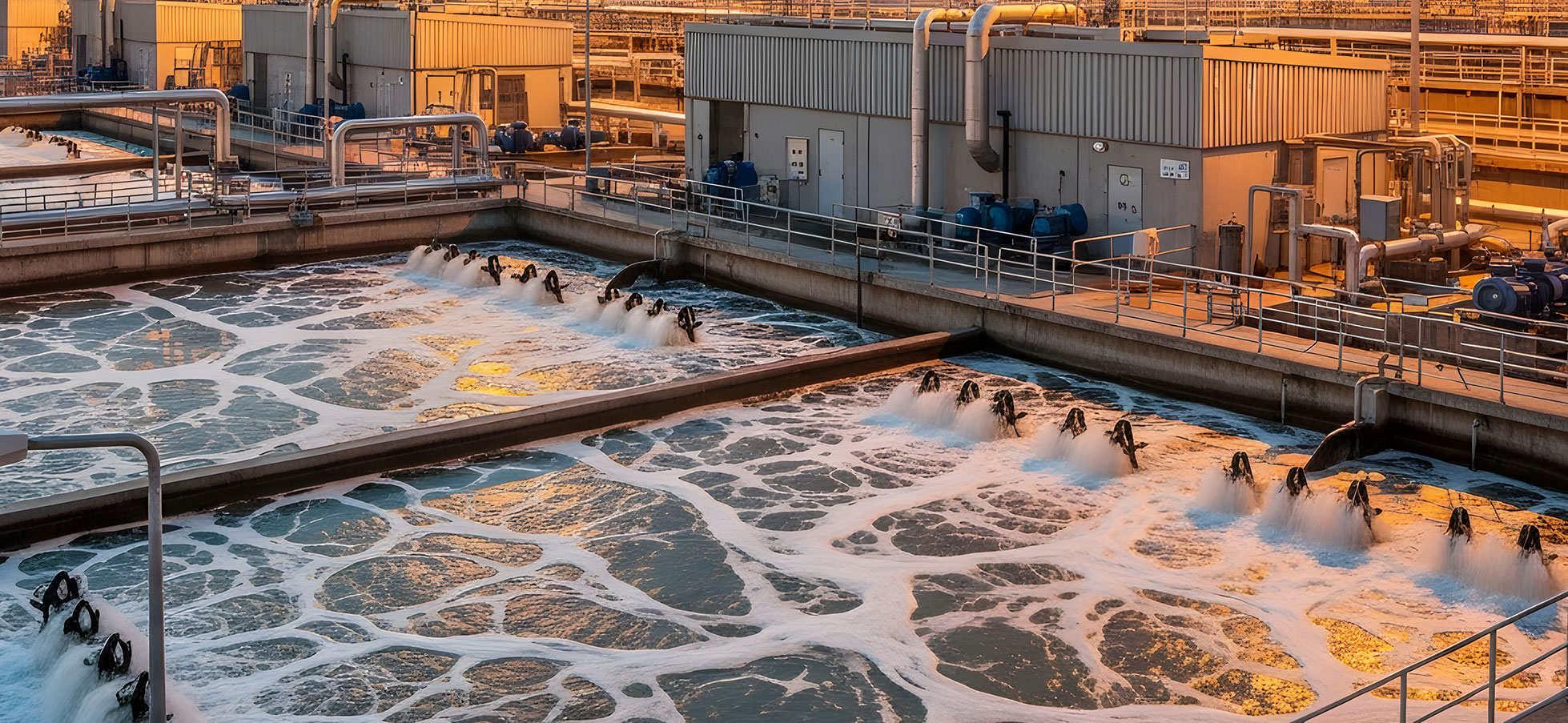
Effluent Treatment Plants (ETP)
Hydroxy designs and delivers Effluent Treatment Plants to treat process wastewater generated by industrial and commercial operations—combining physical, chemical and appropriate downstream treatment processes to achieve reliable effluent quality for discharge, further treatment or reuse.
Effluent Treatment Plants (ETP)
Industrial wastewater is fundamentally different from ordinary domestic wastewater.
Manufacturing and process operations can generate effluent containing varying concentrations of suspended solids, dissolved contaminants, oils and grease, organic matter, chemicals, colour, salts, acidic or alkaline constituents and other process-specific pollutants.
Because the composition of industrial effluent depends directly on the manufacturing process, raw materials and chemicals used, an effective ETP cannot be designed around plant capacity alone.
Hydroxy Water Technologies designs site-specific Effluent Treatment Plants based on detailed wastewater characterisation, production processes, contaminant loading, daily and peak flow, treatment objectives and downstream requirements.
From collection and equalisation through pH correction, chemical treatment, clarification, filtration and advanced polishing, Hydroxy integrates the required processes into a complete ETP engineered for stable treatment performance, operational reliability and long-term lifecycle efficiency.

Industrial Effluent Treatment - Process Wastewater
Different manufacturing activities produce fundamentally different wastewater characteristics. Cleaning operations, production lines, chemical processing, washing, rinsing, utility operations and product manufacturing can each contribute different pollutant loads to the final effluent stream.
Hydroxy evaluates individual wastewater sources before developing the treatment strategy, helping determine whether streams should be combined, segregated or treated independently.
Typical Applications
- Manufacturing Process Wastewater
- Equipment & Floor Wash Water
- Chemical Process Effluent
- Production Line Wastewater
- Utility Wastewater
- Industrial Cleaning & Rinse Water
Complex Industrial Effluent - Engineered for Variable and Challenging Wastewater
Industrial effluent may change according to production schedules, raw materials, cleaning cycles and chemical usage.
Hydroxy engineers ETP systems capable of managing these variations through appropriate equalisation, chemical treatment, solids separation, filtration and process control.
Typical Applications
- Food & Beverage
- Pharmaceutical Manufacturing
- Textile & Dyeing Facilities
- Engineering & Manufacturing
- Automobile & Component Industries
- Commercial & Industrial Laundries
Engineered Around Your Effluent Characteristics, Every Industrial Wastewater Stream Is Different
There is no universal ETP configuration. A wastewater stream with high suspended solids requires a different treatment strategy from one dominated by dissolved organics, oil, extreme pH, colour or high dissolved-solids concentration. For this reason, Hydroxy begins ETP design with effluent characterisation rather than equipment selection.
Important design parameters may include, such as:
- Daily Effluent Generation
- Average & Peak Flow
- pH
- COD — Chemical Oxygen Demand
- BOD — Biochemical Oxygen Demand
- Total Suspended Solids — TSS
- Total Dissolved Solids — TDS
- Colour & Turbidity
- Chlorides & Sulphates
- Alkalinity
- Metals, where relevant
- Process Chemicals
- Temperature
- Required Treated-Effluent Quality
- Intended Discharge / Reuse Route
Hydroxy uses this information to develop the appropriate treatment sequence for the actual wastewater challenge.
*The objective is not to fit the wastewater into a standard ETP package, it is to engineer the ETP around the wastewater.
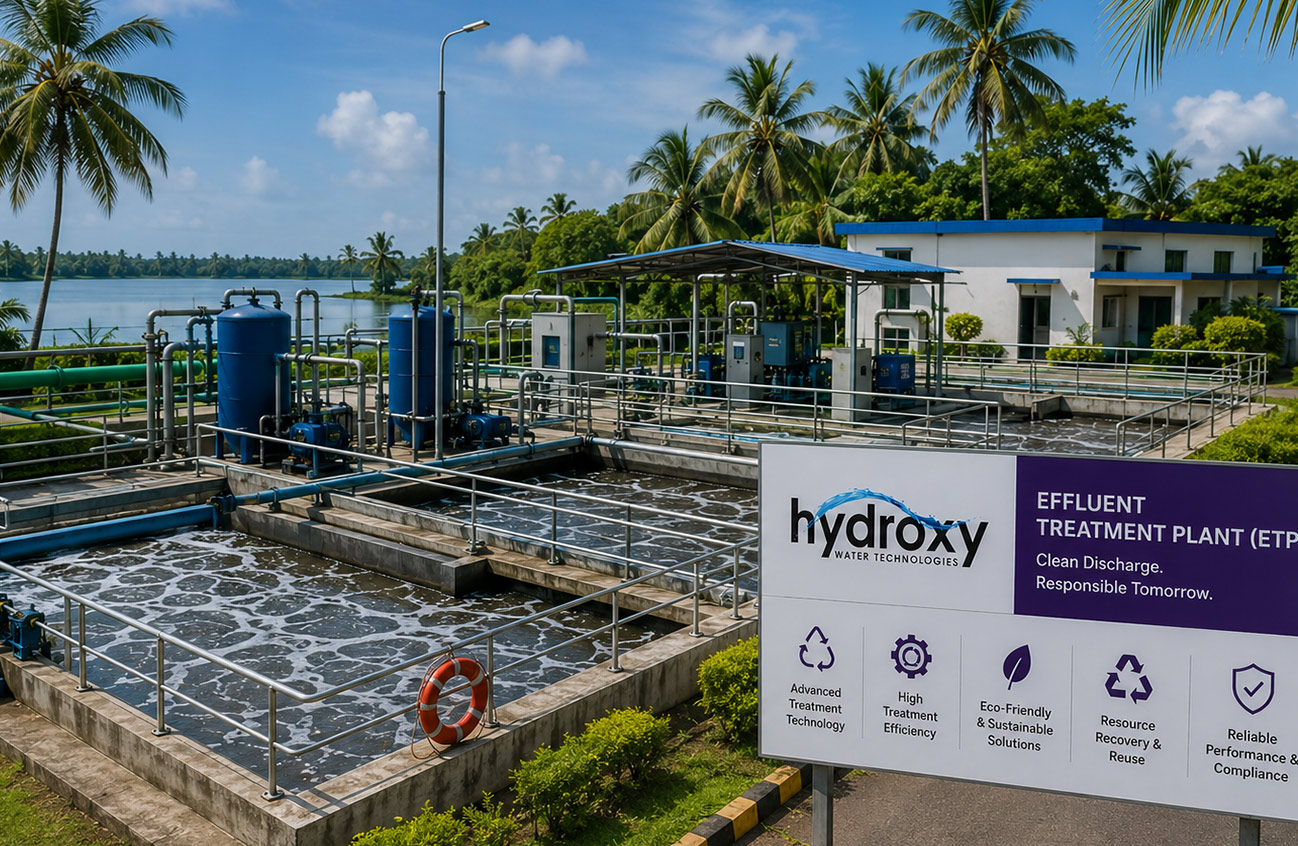
ETP Treatment Process
Depending on wastewater characteristics and the treatment objective, a Hydroxy ETP may incorporate:
Wastewater generated from different production areas is collected and, where necessary, segregated according to its characteristics before treatment.
Coarse solids and debris are removed to protect pumps, pipelines and downstream equipment.
Effluent is collected in an equalisation system to balance fluctuations in flow, pollutant concentration, pH and temperature, providing a more stable feed to downstream treatment stages.
Acid or alkali dosing may be used to adjust wastewater to the appropriate pH range for subsequent chemical and treatment processes.
Chemical treatment can destabilise fine suspended and colloidal contaminants, allowing them to combine into larger flocs for easier separation.
Settled solids and chemically formed sludge are separated from the treated liquid stream.
Depending on the nature of the effluent, additional treatment may be incorporated to address remaining organic, dissolved or process-specific contaminants.
Pressure sand filtration, multimedia filtration, activated carbon filtration or membrane technologies may be used where additional polishing is required.
Additional conditioning or advanced treatment can be incorporated according to the required treated-effluent specification and downstream application.
Sludge produced through chemical precipitation and solids separation is collected and processed through suitable thickening or dewatering arrangements.
How It Works?!
Hydroxy follows a structured engineering process from initial wastewater assessment through commissioning and lifecycle operation.
We understand the manufacturing process, raw materials, chemicals used, production cycles and individual wastewater-generating activities.
Representative wastewater samples are evaluated to determine key physical and chemical characteristics and identify contaminants that drive treatment design.
Based on effluent characteristics, Hydroxy determines the appropriate combination of physical, chemical and advanced treatment processes.
Tank volumes, retention periods, chemical dosing, pumps, clarifiers, filtration systems and hydraulic flow paths are engineered around the treatment requirement.
Pumps, mixers, dosing systems, instrumentation, filtration equipment and automated controls are integrated into a coordinated treatment system.
The ETP is installed, tested and commissioned while treatment parameters are adjusted to achieve stable operating performance.
Chemical dosage, process conditions, sludge generation and equipment operation are reviewed and optimised based on actual plant performance.
Hydroxy supports continued ETP operation through preventive maintenance, process troubleshooting, equipment servicing, consumables and plant optimisation.
Chemical Treatment & Solids Separation. Precise Chemical Treatment for Complex Effluent
Many industrial effluents contain dissolved, colloidal or fine suspended contaminants that cannot be removed effectively through simple filtration alone.
Hydroxy can integrate controlled chemical-treatment processes such as:
- pH Adjustment
- Coagulation
- Flocculation
- Chemical Precipitation
- Oxidation, where required
- Neutralisation
- Solids Separation
- Clarification
Chemical selection and dosing are determined according to the actual effluent characteristics and treatment objective.
Sludge Management. Treatment Doesn't End With Clean Water
Industrial effluent treatment frequently transfers contaminants from the liquid stream into a concentrated sludge stream. Effective sludge management is therefore an integral part of ETP design.
Depending on the treatment process, Hydroxy can integrate:
- Sludge Collection
- Sludge Holding
- Sludge Thickening
- Filter Press Systems
- Dewatering Systems
- Sludge Transfer Pumps
The sludge-handling arrangement is designed according to sludge quantity, characteristics and plant operating requirements.
ETP Upgradation & Performance Improvement. Existing ETP Not Performing as Expected?
Changes in production capacity, raw materials or manufacturing processes can significantly alter wastewater characteristics.
An ETP that performed effectively when originally installed may struggle when:
- Production capacity increases
- Effluent characteristics change
- Chemical consumption becomes excessive
- Treated-water quality becomes inconsistent
- Sludge generation increases
- Equipment performance deteriorates
- Manual intervention becomes excessive
- Existing treatment stages become overloaded
Hydroxy evaluates existing ETPs to identify hydraulic, process, chemical, mechanical and automation bottlenecks before recommending modifications.
Upgradation may include process optimisation, additional treatment stages, equipment replacement, filtration improvements, automation or capacity enhancement.
Why Hydroxy?
ETP Engineering Begins With Understanding the Process
Successful industrial effluent treatment requires more than combining tanks, pumps and chemical dosing equipment. The ETP must understand what happens inside the manufacturing process because changes in production directly influence what enters the treatment plant.
Incorrect process selection or inadequate equalisation can result in unstable treatment, excessive chemical consumption, high sludge generation, inconsistent output quality and unnecessary operating costs.
Hydroxy combines wastewater characterisation, process engineering, chemical treatment expertise, equipment integration, automation, site execution and lifecycle support to develop ETP solutions around actual industrial operating conditions.
Our approach begins with one essential question: "What is your production process putting into the wastewater?
Key Benifits
Equalisation and appropriately engineered process stages help manage fluctuations in flow, pH and contaminant concentration associated with changing production conditions.
Physical, chemical and advanced treatment processes are combined according to the pollutants present in the industrial wastewater.
Chemical selection, dosing and reaction conditions can be engineered around the actual effluent characteristics to support effective treatment while avoiding unnecessary chemical consumption.
Hydroxy considers sludge generation and handling as part of the complete ETP process rather than treating it as a separate afterthought.
Chemical dosing, pumps, mixers, tank levels and selected process parameters can be integrated with automated control systems to improve operational consistency.
Existing ETPs can be assessed and modified when production capacity, wastewater characteristics or treatment requirements change.
Hydroxy supports the plant beyond commissioning with preventive maintenance, process troubleshooting, chemical optimisation, equipment servicing and performance improvement.